Published · Last updated · Rapid Water Damage Restoration Illinois
In July 2023, a slow-moving storm dumped as much as nine inches of rain on parts of Chicagoland in a single day. More than 70,000 basements flooded, with damage estimates past half a billion dollars. A state disaster declaration on July 11 and a federal declaration on August 15 unlocked FEMA individual assistance for affected homeowners.
And then came the second shock for thousands of Illinois families: their homeowners insurance didn't cover the loss — because of a distinction most people never learn until it's too late. Homeowners insurance covers some kinds of water damage, and firmly excludes others. Whether your claim succeeds usually comes down to one question: *where did the water come from, and how did it get in?*
The Rule That Decides Almost Every Claim: Sudden vs. Gradual
Insurance adjusters apply one test above all others: was the damage sudden and accidental, or gradual?
Sudden and accidental means it happened quickly and without warning — a supply line bursts, a washing machine hose ruptures, a water heater fails. These are generally covered because no reasonable maintenance could have predicted the moment of failure.
Gradual means it developed over time — a slow drip rotting framing for months, seepage through foundation cracks worsening each spring. Insurers treat these as maintenance issues: you had time to find and fix the problem.
Two similar-looking stains can get opposite decisions: a burst-pipe stain from Tuesday is covered; the same stain from a pinhole leak weeping since last fall is excluded. When you discover water damage, document when you found it and what you did immediately.
What a Standard Illinois Homeowners Policy Typically Covers
While every policy differs, standard HO-3 policies generally cover water damage from these sudden, internal sources:
- Burst pipes — a genuine Illinois hazard when temperatures plunge below zero. Coverage typically applies *if you took reasonable precautions to keep the home heated* — more on that below.
- Appliance and system failures — a washing machine hose that lets go, a dishwasher that overflows, a water heater tank that ruptures.
- Accidental overflow from household plumbing and fixtures.
- Weight of ice, snow, or sleet that damages the structure and lets water in.
- Ice dam damage — generally covered if the roof was reasonably maintained. Note: insurers typically won't pay to remove the ice dam, only for the damage it caused.
One thing policies usually don't cover even in a valid claim: the source of the problem itself. If a failed water heater floods your basement, insurance typically pays for the water damage — not for a new water heater.
The Big Exclusion: Flood
Here's the distinction that blindsided so many homeowners in July 2023: standard homeowners insurance does not cover flood damage. Not flooding near a river, not flooding from record rainfall. Flood — water entering from outside the home, from the ground up — is excluded, full stop.
Flood coverage comes from a separate policy — Congress created the National Flood Insurance Program (NFIP) in 1968 for this purpose, and private insurers offer flood policies too. The critical catch: flood insurance must be purchased before the storm, since there's typically a waiting period before coverage takes effect.
The July 2023 disaster is instructive. The federal disaster declaration unlocked FEMA individual assistance grants, but those are limited, needs-based aid — not a substitute for insurance. If your Illinois home has a basement, especially in a low-lying area or a neighborhood with backup history, ask your agent about flood coverage before storm season.
Sewer Backup and Sump Pump Coverage: The Endorsement You Need
The exclusion that hits closest to home for Illinois: water that backs up through sewers or drains is typically excluded from standard policies unless you've added a specific endorsement. Sump pump discharge or overflow is usually treated the same way.
This matters enormously here. Much of Chicago and the older suburbs run on combined sewers — sanitary sewage and stormwater sharing the same pipes. When a massive storm overwhelms the system, as in July 2023, what surges up through basement floor drains can include sewage. That's a sewer backup event, and without the endorsement, a standard policy won't respond — even though the storm was the trigger.
The sewer backup endorsement is one of the highest-value additions an Illinois homeowner with a basement can make. Ask your agent this week whether your policy includes it — and confirm the limit is enough for a real basement restoration, since defaults are often lower than people assume.
Illinois-Specific Wrinkles: Freezing Pipes, Ice Dams, and Empty Homes
A few scenarios deserve special attention in Illinois:
Frozen pipes and the heat rule. Burst pipes from freezing are typically covered — but insurers expect reasonable prevention steps. Turn the heat off while on vacation and your claim will likely be denied. The University of Illinois Extension advises that if you'll be away in winter, have someone check the house daily to confirm the heat is on, or shut off and drain the water system — and document what you did.
Ice dams. Freeze-thaw cycles make ice dams a recurring Illinois winter problem. Resulting damage is generally covered if the roof was reasonably maintained; if the insurer can show pre-existing neglect, expect a fight. Keep records of roof maintenance.
Vacant homes. Policies often restrict water damage coverage if a home sits vacant beyond a set period (commonly around 60 days, though it varies). If a property will sit empty, tell your insurer and ask what coverage requires.
Protecting Your Claim: What to Do Right After Water Damage
If you're reading this with wet carpet underfoot, these steps protect both your home and your claim:
- Mitigate first. Your policy requires reasonable steps to prevent further damage — shut off the source, move valuables, begin removing water. You do not need to wait for the adjuster, and waiting can be held against you.
- Document before cleanup. Photograph and video every affected area, including the source. Keep a written timeline: when you discovered the damage, what you did, who you called.
- Don't discard items yet. If you must throw something out for health reasons (sewage-soaked carpet), photograph it thoroughly first.
- Call your insurer promptly. Ask what's covered, what your deductible is, and whether emergency mitigation needs pre-approval.
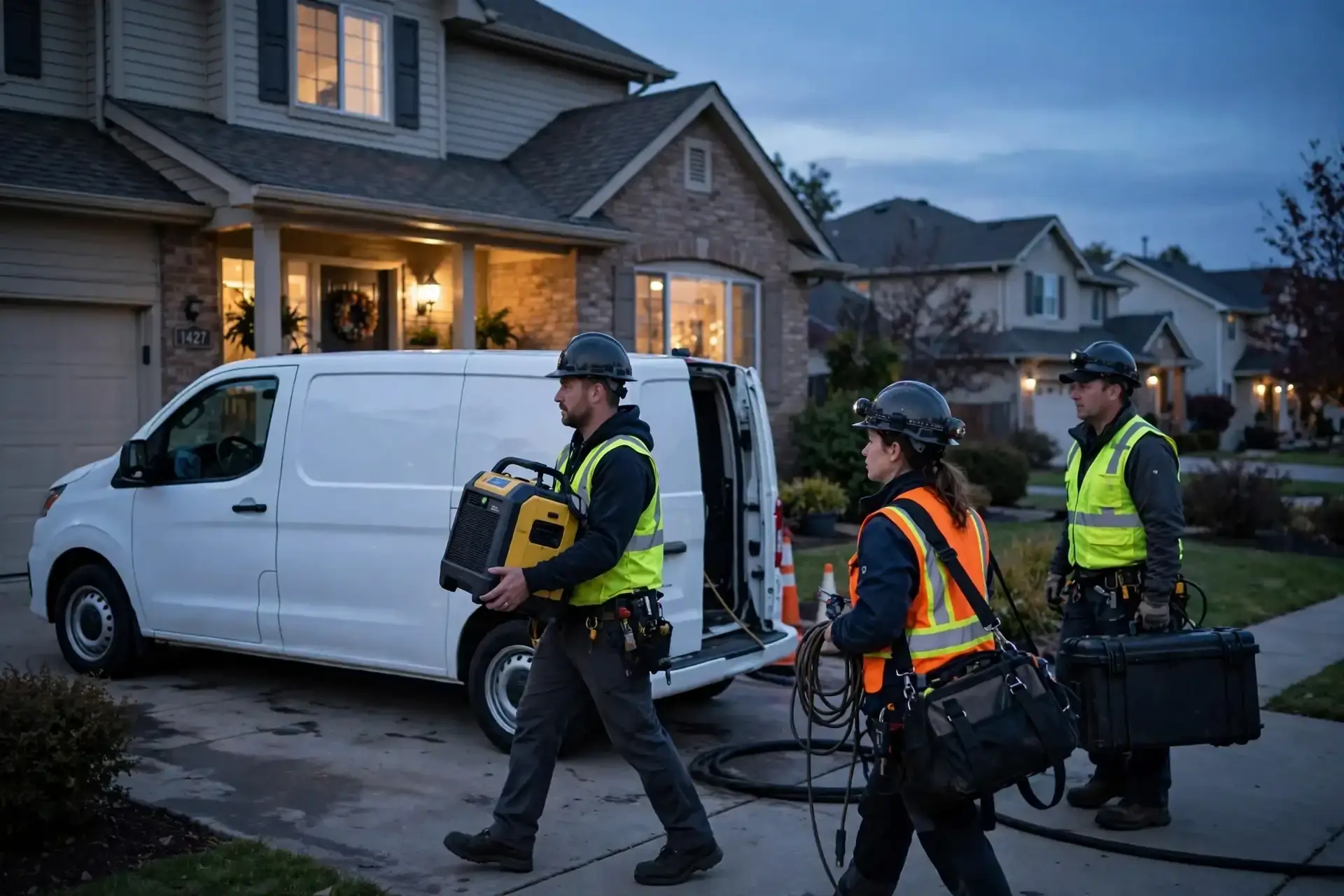
- Get professional documentation. Moisture readings, photos, and equipment logs create the paper trail adjusters need. Rapid Water Damage Restoration Illinois's teams document to insurance standards on every job — from water damage restoration in Rockford to water damage restoration in Springfield and water damage restoration in Peoria.