On April 13, 1992, an engineer at the Merchandise Mart reported water pouring into a sub-basement at 5:57 a.m. What followed became the Great Chicago Flood: a leak in the freight-tunnel system beneath the Chicago River spread through the Loop's underground passages, and at the worst, 230 buildings lost power. Estimated losses reached roughly $1.8 billion.
In April 2013, Chicago recorded its wettest April ever, the Des Plaines River crested at a record 10.92 feet, and emergency management logged more than 1,500 flooding calls. Then came July 1–2, 2023: 2 to 9 inches of rain in about 18 hours, roughly 70,000 flooded basements, and a federal disaster declaration on August 15, 2023. The thread connecting all three disasters runs under your home: a combined sewer system where waste and stormwater share pipes, heavy Cook County clay soils, and a stubbornly high water table. When big rain hits, water has nowhere to go but into low-lying buildings.
Our IICRC-trained technicians know Chicago's water. We arrive with commercial extraction and drying equipment and the documentation your insurer needs, and we stay until moisture readings confirm the job is done. Call (773) 200-3228 anytime — day or night.
Common causes of water damage in Chicago
Chicago's floods are mostly pluvial, not riverine: the vast majority come from overwhelmed sewers and surface water. The city's combined sewer system is the central culprit — one heavy downpour can surcharge the pipes and send sewage backup surging into basements through floor drains. Cook County's clay soils compound the problem by refusing to absorb prolonged rainfall, so hydrostatic pressure builds against foundations and forces seepage through cracks, cove joints, and porous masonry.
An IDNR study found 90% of flood damage claims between 2007 and 2014 were on properties outside the mapped 100-year floodplain — "not in a flood zone" means little in Chicago. Common local mitigations: sump pumps, interior French drains, check valves, overhead sewers, and downspout disconnection. Winter adds a second season of risk: during the January 30–31, 2019 polar vortex, O'Hare hit −23°F, dozens of water mains broke, and pipes froze and burst across the city. Older brick housing with original plumbing is the most vulnerable stock in the city.
Our Chicago water damage services
Water extraction:
Truck-mounted and portable extractors pull standing water from basements, ground floors, and commercial spaces — scaled for a soaked bungalow or a flooded Loop sub-level.
Structural drying and dehumidification:
Clay soil and a high water table keep buildings wet long after rain stops. Industrial air movers and low-grain dehumidifiers, verified with moisture meters, bring drywall, framing, and masonry to genuinely dry readings.
Mold remediation:
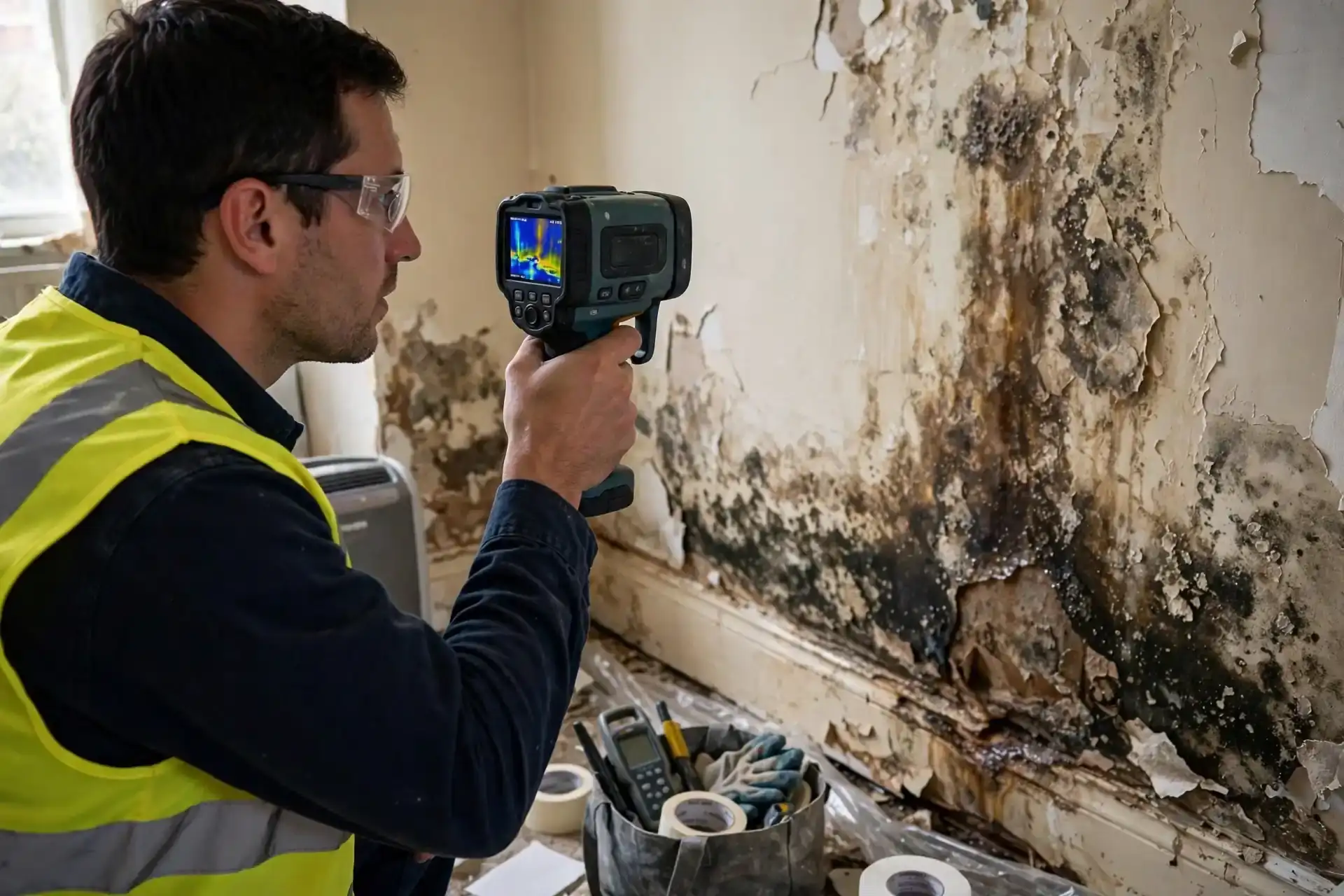
In vintage housing with original plaster and porous brick, mold can establish within days of a sewer backup. We contain, remove, and treat affected materials to IICRC standards.
Sewage cleanup:
Combined-sewer backups are one of Chicago's signature water events. Category 3 water gets full containment, disinfection, and removal of unsalvageable materials.
Storm damage repair:
From flash flooding to winter burst pipes, we stabilize the structure, dry it out, and coordinate repairs.
Areas we serve across Chicago
We respond citywide — North Side (60613, 60614, 60657, 60625, 60626, 60640, 60645, 60659), Near North (60610, 60611, 60654, 60642), the Loop and downtown (60601–60607), West Side (60622, 60612, 60624, 60644), Southwest Side (60629, 60632, 60638, 60666), and South Side (60616, 60617, 60619, 60620, 60621, 60628, 60636, 60643). From southwest bungalows to Northwest Side two-flats and high-rise condos along 22 miles of lakefront shoreline, we've dried them all. Our crews know the city's arteries — from the Lakefront Trail to O'Hare and Midway — and reach emergencies fast.
How We Restore Water-Damaged Homes in Chicago
- Emergency response and assessment. One call to (773) 200-3228 gets a crew dispatched 24/7. We assess the water category, affected materials, and safety hazards on arrival.
- Water extraction. Standing water comes out first — every hour of standing water multiplies damage.
- Drying and dehumidification. Equipment runs until moisture meters confirm materials are genuinely dry, not just surface-dry.
- Cleaning and sanitizing. Contaminated surfaces are treated; salvageable contents are cleaned.
- Mold prevention and remediation. Antimicrobial treatment where needed, and remediation if mold has taken hold.
- Repairs and documentation. We coordinate repairs and document everything — photos, moisture logs, itemized records — so your claim moves smoothly.
Cost factors & insurance claim help
Every water loss is different, so we never quote from a script — cost depends on water volume, how far it traveled, what materials are affected, and whether sewage contamination requires removal. We promise transparency: an itemized scope before work proceeds, no surprises. We work directly with your insurer, providing moisture readings, photo timelines, and detailed line items, so you aren't stuck translating a restoration into claim language. Call (773) 200-3228 to understand your coverage from the first conversation.
Chicago water damage FAQs
My home is outside the 100-year floodplain — am I still at risk? Yes. An Illinois Department of Natural Resources study found that 90% of flood damage claims from 2007 to 2014 were on properties outside the mapped 100-year floodplain. In Chicago, sewer backup and surface flooding drive most losses — and those don't respect floodplain lines.
What happened during the July 2023 flood, and could it happen again? On July 1–2, 2023, 2 to 9 inches of rain fell in about 18 hours — exceeding the estimated 100-year storm in spots. Roughly 70,000 basements flooded and damages topped $500 million, earning a federal disaster declaration on August 15, 2023. Extreme rainfall is the city's defining water risk.
Why does my basement flood with sewage during heavy rain? Chicago's combined sewer system carries sanitary waste and stormwater in the same pipes. Intense rainfall can surcharge those pipes, sending sewage backup up through floor drains and fixtures. Sump pumps, check valves, overhead sewers, and downspout disconnection are the standard local mitigations.
Will homeowners insurance cover flood damage? It depends on the source. Sudden, accidental events like burst pipes and many sewer backups are typically covered, while rising surface water usually requires separate flood insurance. We document the water's source and pathway carefully and work directly with your insurer to support your claim.
What should I do if my pipes froze during a polar vortex? Don't try to thaw them with an open flame. Shut off the water supply if you can and call (773) 200-3228 immediately. We handle extraction from burst-pipe flooding, structural drying, and mold prevention — the full aftermath of events like the January 2019 deep freeze.
How quickly can you reach my home? We operate 24/7 across all of Chicago. The sooner extraction starts, the less damage — call (773) 200-3228 and we'll dispatch.
Water Damage in Chicago? We Respond 24/7
Every minute counts. Rapid Water Damage Restoration Illinois dispatches certified technicians across Chicago day and night — with insurance documentation handled for you.
Call (773) 200-3228 NowWhat Chicago Customers Say
A review from a customer in Chicago.
★★★★★
Saved our kitchen
A pipe burst under our kitchen sink and water was everywhere. Rapid Water Damage Restoration Illinois responded fast, shut everything down, and dried the cabinets and flooring without tearing everything out. Professional, clean, and respectful of our home. Highly recommend.
Water Damage Restoration Services in Chicago
- Our water damage restoration service
- Commercial Water Damage Restoration in Chicago
- Residential Water Damage Restoration in Chicago
- Emergency Flood Cleanup in Chicago
- Storm & Flood Damage Restoration in Chicago
- Ceiling & Wall Water Damage Repair in Chicago
- Sewage Backup Cleanup in Chicago
- Mold Remediation in Chicago
- Burst Pipe & Leak Water Damage in Chicago
- Drying & Dehumidification in Chicago
Helpful Water Damage Guides
Official resources: FEMA FloodSmart (flood insurance) and EPA guide to mold and moisture.