A Sewage Backup Needs a Professional Response
Few home emergencies are as stressful — or as hazardous — as sewage backing up through drains, toilets, or basement floor drains. It usually happens at the worst possible moment: during a heavy downpour when the municipal system is overwhelmed, or without warning when a line fails. The water isn't just dirty; it carries bacteria, viruses, and other contaminants that pose real health risks to everyone in the home, especially children, older adults, and anyone with a weakened immune system.
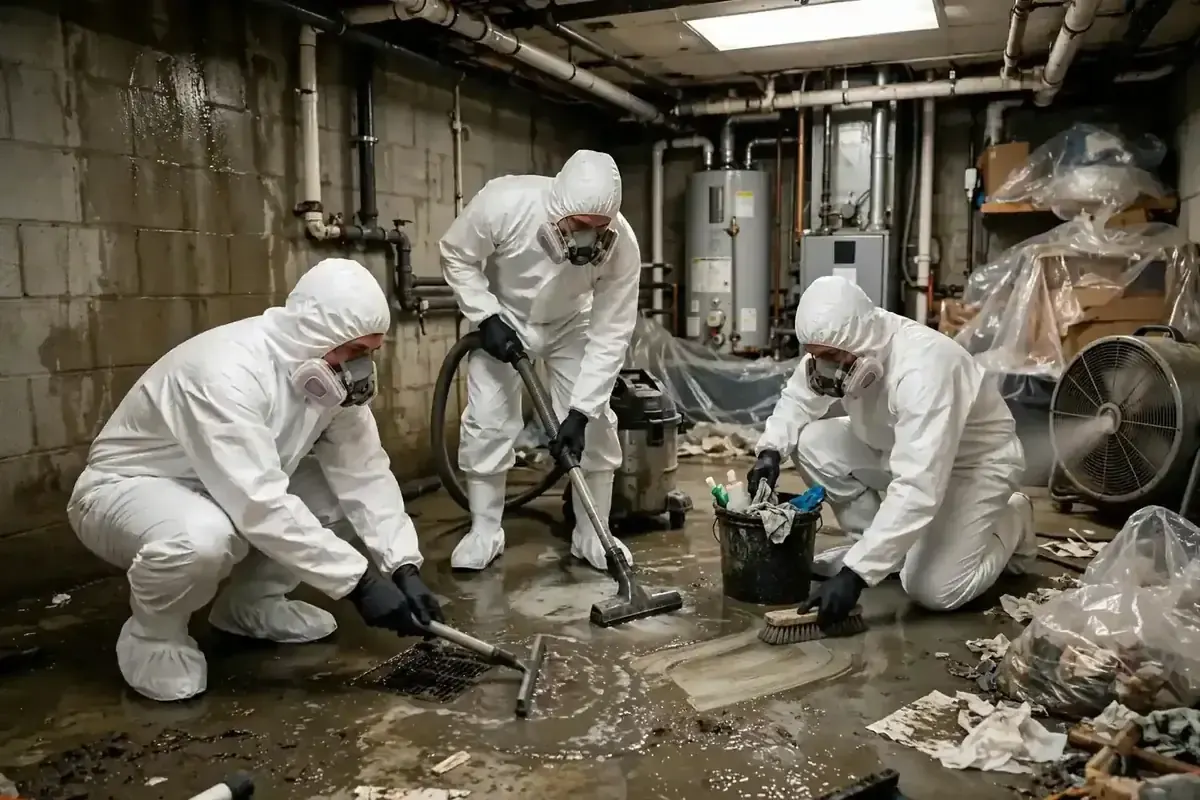
This is not a situation for a mop, a shop vacuum, and hope. Sewage backup cleanup requires protective equipment, proper containment so contaminants don't spread through the house, removal of materials that can't be salvaged, and professional-grade disinfection of everything that remains. Our trained technicians follow established industry protocols for contaminated water losses, and we document the work thoroughly for your insurance claim. If you're facing a backup right now, call (773) 200-3228 — and stay out of the affected area until we arrive.
Why Sewage Is Dangerous
In the restoration industry, sewage is classified as Category 3 water — commonly called "black water." That classification means the water is grossly contaminated and can contain harmful microorganisms capable of causing serious illness. Exposure can happen through direct contact with skin, through splashes to the eyes or mouth, or by breathing airborne contaminants stirred up during improper cleanup. Contaminated water also soaks into porous materials where it can't simply be wiped away — drywall, carpet padding, upholstery, and insulation that absorbed sewage remain a health concern even after they look dry on the surface.
There's another risk people underestimate: the longer sewage sits, the worse the contamination gets. Standing black water breeds additional microbial growth and seeps deeper into building materials, turning a contained cleanup into a much larger one. Fast professional response limits both the health risk and the scope of material removal. That's why sewage backups jump to the front of our schedule — every time.
Common Causes of Sewage Backups in Illinois
Understanding why backups happen helps explain why they're so common in our area:
- Combined sewer surcharge. Many older Illinois communities use combined sewer systems that carry both stormwater and sewage in one pipe. During intense rainfall, the system surcharges — pressure builds and wastewater is forced back up through basement drains and lower-level plumbing.
- Heavy rain overwhelming municipal lines. Even in separated systems, extreme storms can flood sewer infrastructure, sending water back toward homes at the low points of the system.
- Aging private sewer lines. Older clay and cast-iron laterals crack, shift, and invite tree root intrusion. A partial blockage turns into a full backup the next time the system is stressed.
- Improper disposal and blockages. Grease, wipes marketed as flushable, and other debris accumulate in lines over time, narrowing the pipe until normal flow can't get through.
Our Professional Sewage Cleanup Process
Contaminated water losses follow a strict protocol — there are no shortcuts when health is on the line:
- Containment and safety setup. We isolate the affected area with physical barriers and, where needed, negative air pressure — so contaminants don't migrate to clean parts of your home while we work.
- Extraction of sewage and contaminated water. Standing black water is pumped out and extracted with dedicated equipment — never the same gear used for clean-water jobs.
- Removal of unsalvageable porous materials. Carpet and padding, drywall that wicked up sewage, insulation, and upholstered items that absorbed contamination are removed and disposed of properly — they cannot be disinfected reliably.
- Cleaning and disinfection. Hard, non-porous surfaces — concrete, tile, framing that can be saved — are thoroughly cleaned and treated with professional antimicrobial products.
- Drying and final verification. The structure is dried with commercial equipment and verified with moisture readings before rebuild begins, so no residual moisture is sealed inside walls or floors.
What Homeowners Should NOT Do
We know the instinct is to start cleaning immediately. With sewage, restraint protects your health:
- Don't enter the contaminated water. Keep children and pets completely away from the affected area. Avoid skin contact and never ingest or splash the water.
- Don't run your HVAC system. Forced air can spread airborne contaminants from the affected area throughout the whole house. Shut the system off until the area is contained.
- Don't use household cleaning products and assume it's safe. Surface wiping doesn't address contamination soaked into porous materials, and mixing cleaners can create hazardous fumes.
- Don't throw contaminated items in with regular trash or laundry. Bag what you must move, keep it isolated, and let our crew handle disposal — contaminated materials need proper handling.
Sewage Backup FAQs
Is sewage backup cleanup covered by homeowners insurance?
It depends on your policy. Standard homeowners policies often exclude sewer backup unless you've added a specific endorsement or rider. Check your policy and talk to your agent — and know that we provide detailed documentation of the damage and our work to support whatever claim you file.
Can I clean up a small sewage backup myself?
We don't recommend it. Even a small backup involves Category 3 contaminated water, and without proper protective equipment, containment, and disinfection, you risk both your health and spreading contamination to clean areas. Professional cleanup is the safe choice at any scale.
What gets removed and what can be saved?
Porous materials that absorbed sewage — carpet and pad, affected drywall, insulation, mattresses and upholstered furniture — generally must be removed and discarded. Hard, non-porous surfaces like concrete, tile, and solid framing can typically be cleaned, disinfected, and kept. We'll walk you through every decision.
How long does sewage cleanup take?
The emergency cleanup — extraction, removal, and disinfection — often takes a day or two. Drying the structure adds several more days, and full rebuild of removed drywall and flooring follows. We'll give you a realistic timeline after assessing your specific situation.
How can I prevent future sewage backups?
A licensed plumber can evaluate options like a backwater prevention valve on your main line, which helps stop municipal surcharges from entering your home. Keeping your lateral line clear of roots and debris through periodic professional cleaning also helps. After cleanup, we're happy to discuss what we observed about your situation.
Sewage Emergency? Call Now
Stay out of the water — our trained crew handles sewage cleanup safely and thoroughly.
Call (773) 200-3228