Waukegan is the only city in this part of Illinois where the water can come at you from two directions: the lake to the east and the creeks everywhere else. On January 10–11, 2020, record-high Lake Michigan water levels met a powerful storm and produced the most significant lakeshore flooding in years — shoreline flooding and erosion along a coast that had already seen high-water peaks in the mid-1980s and mid-1990s. And the creeks have their own history: the 1938 flood on Dead Dog Creek was the highest recorded since at least 1900, overwhelming Waukegan's storm sewers and flooding the veterans hospital in North Chicago, while the November 1951 Waukegan River flood was reported as the highest in the previous 65 years.
More recently, July 2017 flash flooding caused $12.7 million in damages across Lake County and nearly sealed Waukegan off from the rest of the county, and in September 2019, residents had to be rescued from their homes after severe weather hit the northern suburbs. Through it all, Waukegan's housing stock has stood its ground: the Near North Historic District, listed on the National Register in 1978, holds homes from the 1840s to 1928 in Greek Revival, Italianate, and period styles.
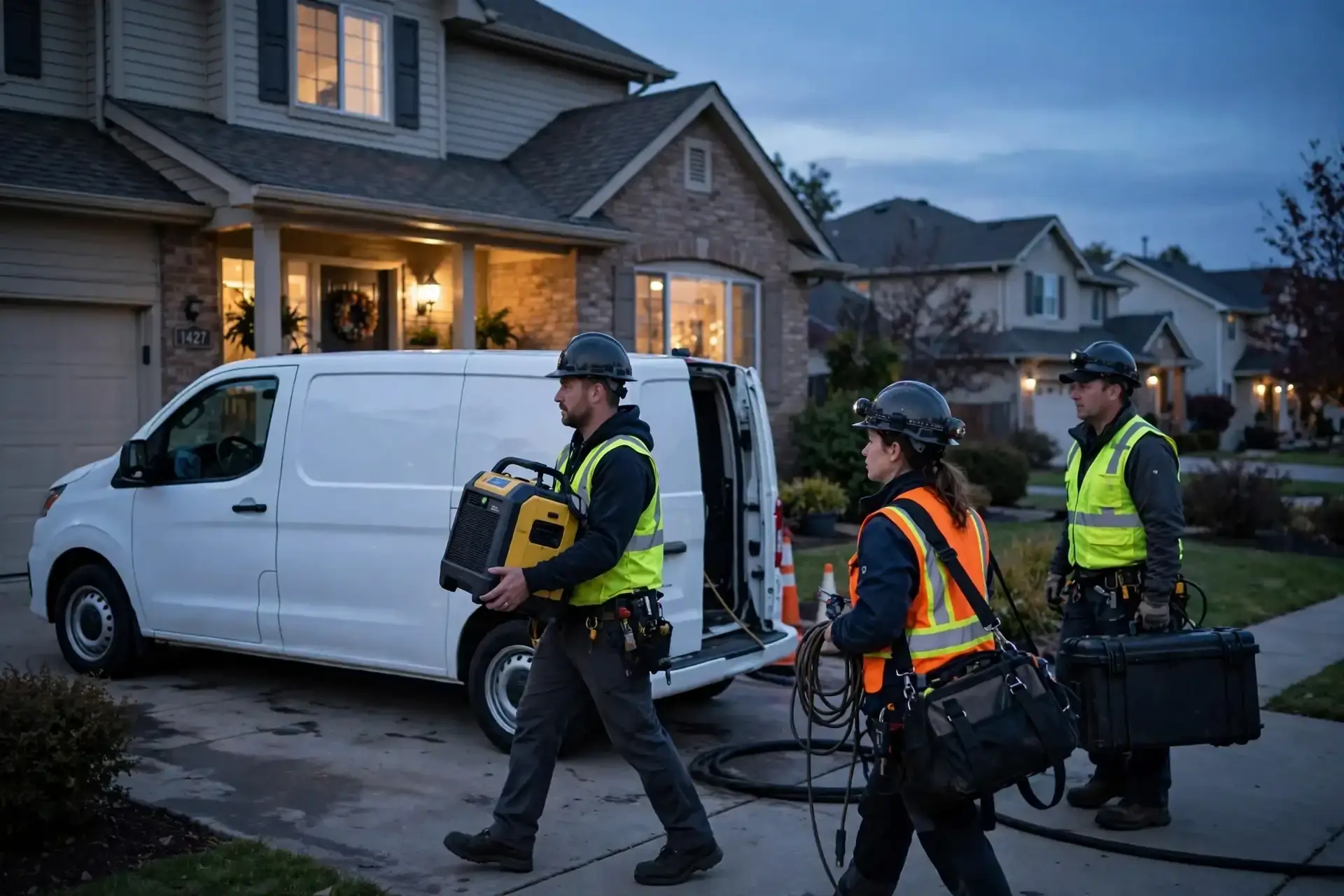
Rapid Water Damage Restoration Illinois is ready for both of Waukegan's water threats. Our IICRC-trained technicians respond 24/7 — lake storm, creek flood, or burst pipe — with industrial extraction and drying equipment and the local knowledge to protect everything from a lakefront historic home to a west-side ranch.
Areas We Serve in Waukegan
We serve Waukegan's 60085 and 60087 ZIP codes, including downtown Waukegan and the Near North Historic District, Bonnie Brook, Shore Highlands, Hidden Glen, Marquette Highlands, Norshore Park, and Glenwood Heights. We're minutes from the Genesee Theatre, Waukegan Harbor and marina — one of Lake Michigan's largest recreational harbors — Waukegan Municipal Beach, the Harbor Light, and Bowen Park.
How We Restore Water-Damaged Homes in Waukegan
- Emergency response, day or night. We answer 24/7 and dispatch immediately — lakeshore storms and flash floods do not wait for business hours.
- Inspection and water classification. We assess the damage and identify the water type, from clean supply-line water to contaminated lake and creek floodwater.
- Water extraction. Truck-mounted extractors remove standing water within hours of your call.
- Drying and dehumidification. Commercial air movers and dehumidifiers run until moisture meters confirm the structure is verifiably dry.
- Cleaning, mold remediation, and rebuild. We disinfect contaminated areas, remove mold, restore damaged drywall and flooring to pre-loss condition, and walk the finished job through with you.
Common Causes of Water Damage in Waukegan
- Lake Michigan high water and storms. High-water periods — peaks in the mid-1980s, mid-1990s, and 2019–2020 — combined with strong storms cause shoreline flooding and erosion; the January 2020 event was the worst lakeshore flooding in years.
- Creek and river flooding. The Waukegan River, Kellogg Creek, Pettibone Creek, Bull Creek, and Dead Dog Creek all have flood histories — the 1938 Dead Dog Creek flood and the 1951 Waukegan River flood set the benchmarks.
- Overwhelmed storm sewers. The 1938 flood showed what happens when runoff overwhelms the system: storm sewers back up and localized flooding follows, a pattern repeated in the July 2017 flash floods.
- Lake-wind freeze damage. Lake Michigan wind chill makes freeze severity worse — even 30°F air with a 40 mph lake wind can freeze pipes through small gaps in brickwork, threatening older lakefront homes with pipes in exterior walls.
- Dense clay soil. Chicagoland clay holds water against foundations, so heavy rain becomes sustained pressure on basement walls.
Our Waukegan Water Damage Services
Water extraction
Lakeshore floodwater, creek flooding, sump failures, burst pipes — we pump out standing water fast with truck-mounted extractors.
Structural drying and dehumidification
Lake humidity and saturated framing need deep, metered drying; we verify with moisture readings before we stop.
Mold remediation
Damp lakefront basements and crawlspaces are mold-prone. We contain the area, remove the growth, and treat surfaces so it does not return.
Sewage cleanup
Overwhelmed storm systems can push wastewater into homes. We extract it, disinfect every affected surface, and dispose of contaminated materials safely.
Storm damage repair
From Near North historic homes to west-side ranches, we tear out water-ruined drywall and flooring and rebuild to pre-loss condition.
Cost Factors & Insurance Claim Help
Every Waukegan job is priced on its own facts — never a flat fee. The main cost factors: how much water entered, how long it sat before extraction, the water category (clean supply-line water versus contaminated lake, creek, or sewage water), and how much material — drywall, flooring, cabinetry — must be removed and rebuilt. Lakefront and historic homes can add complexity that we account for honestly in the estimate. We document everything with photos and moisture readings, work directly with your insurance company from the first call, and guide you through the claim so you can focus on getting home back.
Frequently Asked Questions
Can Lake Michigan itself flood my Waukegan home?
Yes. During high-water periods — most recently the record highs of 2019–2020 — a strong storm can push lake water ashore. The January 10–11, 2020 storm produced the most significant lakeshore flooding in years, with shoreline flooding and erosion along Waukegan's coast.
What was the 1938 Dead Dog Creek flood?
It was the highest flood recorded on Dead Dog Creek since at least 1900. Stormwater runoff flooded the veterans hospital in North Chicago and overwhelmed Waukegan's storm sewers, causing localized flooding across the city.
How bad was the 1951 Waukegan River flood?
The November 1951 flooding on Kellogg Creek, Pettibone Creek, and the Waukegan River was severe — the Waukegan River flood was reported as the highest in the previous 65 years.
Does lake wind really make frozen pipes worse in Waukegan?
It does. Lake Michigan wind chill adds real freeze severity: even 30°F air combined with a 40 mph lake wind can freeze pipes through small gaps in brickwork. Older lakefront homes with pipes in exterior walls are the most vulnerable.
Can you preserve the original materials in my Near North Historic District home?
We do our best. The district, listed on the National Register in 1978, includes homes from the 1840s to 1928 in Greek Revival, Italianate, and other period styles. We dry structures carefully and salvage original woodwork, plaster, and period materials wherever it is safe and practical.
Water Damage in Waukegan? We Respond 24/7
Every minute counts. Rapid Water Damage Restoration Illinois dispatches certified technicians across Waukegan day and night — with insurance documentation handled for you.
Call (773) 200-3228 NowWater Damage Restoration Services in Waukegan
- Our water damage restoration service
- Commercial Water Damage Restoration in Waukegan
- Residential Water Damage Restoration in Waukegan
- Emergency Flood Cleanup in Waukegan
- Storm & Flood Damage Restoration in Waukegan
- Ceiling & Wall Water Damage Repair in Waukegan
- Sewage Backup Cleanup in Waukegan
- Mold Remediation in Waukegan
- Burst Pipe & Leak Water Damage in Waukegan
- Drying & Dehumidification in Waukegan
Nearby Areas We Serve Around Waukegan
Helpful Water Damage Guides
- Spring Flooding in Illinois: Home Protection Guide
- Water Damage Restoration Cost in Illinois: What Really Drives the Bill
Official resources: FEMA FloodSmart (flood insurance) and EPA guide to mold and moisture.