Published · Last updated · Rapid Water Damage Restoration Illinois
It's the first question almost every homeowner asks, usually while standing in a wet room and calculating how long life will be disrupted: how long is this going to take? The honest answer has two parts, because "restoration" is really two projects wearing one name — drying the structure and rebuilding what was damaged. Drying is measured in days. Rebuilding is measured in weeks. Understanding where one ends and the other begins is the key to setting realistic expectations for your Illinois home.
The Short Answer: Days to Dry, Weeks to Finish
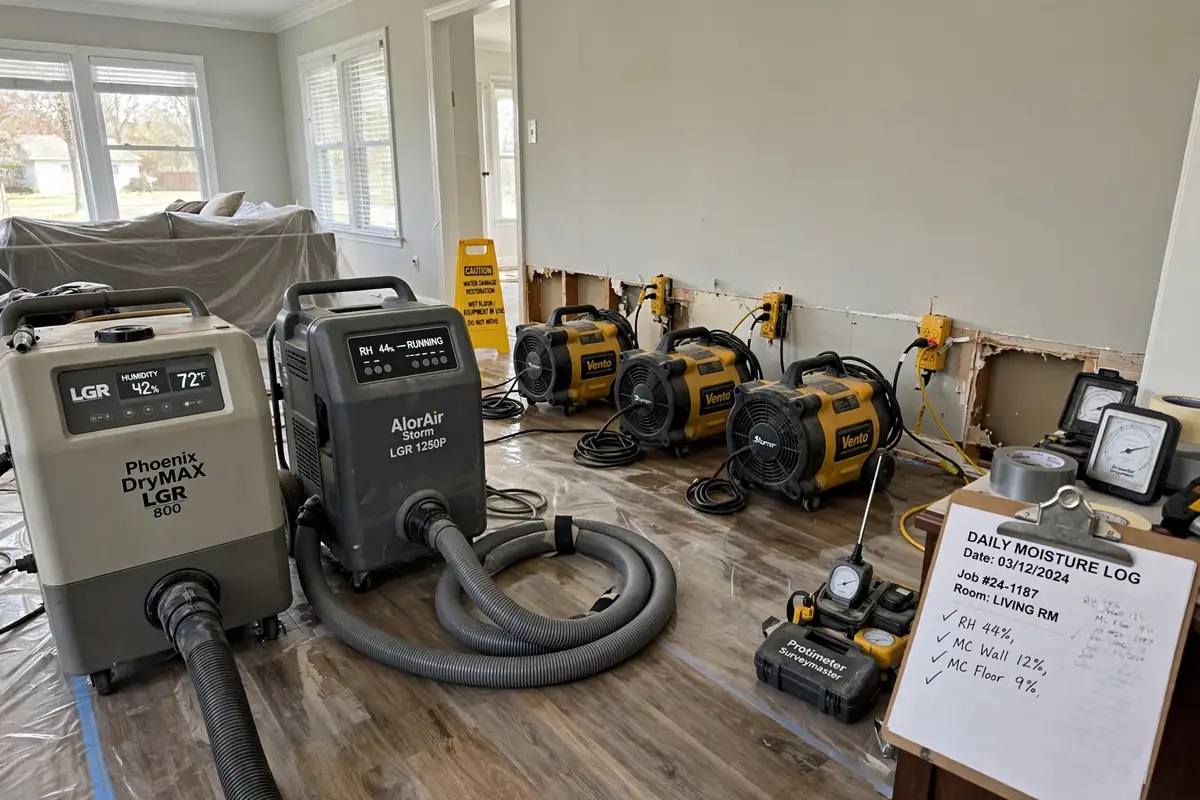
For a typical residential water loss, structural drying takes about three to five days with professional equipment in place — extraction, air movers, dehumidifiers, and daily monitoring until moisture readings confirm materials are truly dry.
The full project — drying plus repairs — runs longer. Minor to moderate jobs typically take one to three weeks from loss to completion. Significant damage can take four to eight weeks or more, especially when walls, flooring, or cabinetry must be removed and replaced.
Those are ranges, not promises. Where your job lands depends on the water category, the materials involved, how fast you called, and factors outside anyone's control — which we'll get to.
A Typical Timeline, Day by Day
Here's what the mitigation phase usually looks like for a straightforward residential loss:
Day 1 — Emergency response. Extraction of standing water, moisture mapping of all affected areas (including inside walls and under floors), removal of unsalvageable materials if the water is contaminated, and placement of commercial air movers and dehumidifiers. This is the most important day: everything after depends on getting water out fast and equipment sized right.
Days 2–3 — Active drying and monitoring. Equipment runs continuously while technicians take moisture readings, reposition air movers, and confirm humidity is dropping. Stubborn readings in this window are normal — different materials release moisture at different rates.
Days 3–5 — Verification. Materials are checked against a dry standard: readings compared to unaffected materials in the same home, not a calendar date or touch test. When the numbers confirm the structure is dry, equipment comes out.
After drying — repairs and rebuild. This is the variable phase: replacing drywall, flooring, and trim; reinstalling fixtures; matching finishes. A single-room patch and repaint might add days; a finished basement with new flooring and cabinetry can add weeks. Material availability often sets this schedule more than labor does.
Why Timelines Differ: Water Category and Loss Class
Two jobs that look identical from the doorway can run on completely different clocks. Professionals classify every loss two ways:
Water category describes contamination. Category 1 (clean water from a supply line) is the fastest: extract, dry, monitor. Category 2 (gray water from appliances) adds antimicrobial treatment and more material removal. Category 3 (black water — sewage, floodwater, sewer backups) is the longest: porous materials that contacted the water generally must be removed rather than dried. A Chicagoland basement flooded through floor drains during a combined-sewer surcharge is a Category 3 job from the start.
Class of water loss describes how much water materials absorbed. The industry standard (IICRC S500) recognizes four classes: a small contained wet area dries quickly, while water wicked deep into drywall, hardwood, or concrete demands far more aggressive dehumidification and a longer equipment run. Surface-dry drywall can still be wet inside; hardwood releases moisture slowly; thick concrete dries on a timeline of weeks.
That's why your neighbor's "same" flood finished faster: different water, different materials, different saturation.
The Drying Science: Why Rushing It Causes Mold
Structural drying is a controlled cycle: air movers push dry air across wet surfaces to speed evaporation, and dehumidifiers pull the resulting humidity out of the air so evaporation can continue. It only works as fast as the slowest material will release its moisture. Cranking up heat without dehumidification just makes humid air — which can drive moisture deeper and create ideal conditions for mold.
"Dry" is also a measurement, not a feeling. Professionals compare readings in affected materials against unaffected materials of the same type in the same building — the dry standard. A wall can feel dry while the wall cavity inside is still wet enough to grow mold. Pulling equipment based on a touch test is a classic cause of post-restoration mold.
Illinois adds its own wrinkle: winter drying is harder. Cold outdoor air changes indoor humidity dynamics, so drying takes longer and demands more careful equipment management than the same loss in July. Summer brings the opposite challenge — humid outdoor air fighting the dehumidifiers. Either way, the timeline follows the readings.
What Delays Jobs (It's Usually Not the Drying)
When a restoration stretches past expectations, the culprit is rarely the drying phase. These are the usual suspects:
- Insurance approvals. If the adjuster must inspect before demolition, or there's a scope dispute, the job waits. Starting mitigation immediately helps, but some decisions can't be unmade once drywall is removed.
- Hidden moisture discoveries. Water travels unpredictably — behind a built-in, under a threshold, into an unsuspected wall cavity. Each discovery extends the scope.
- Mold. Found mold becomes its own remediation scope with containment protocols — typically adding days rather than restarting the project.
- Material lead times. Flooring, cabinets, and fixtures arrive on the manufacturer's schedule. Backordered materials are the most common reason a "done drying" home still isn't finished.
- Contractor sequencing. Electricians, drywall crews, painters, and flooring installers must be scheduled in order — and after a widespread storm like July 2023, every trade in the region is booked solid.
None of these are anyone's fault. They're why experienced restorers talk in ranges and milestones rather than dates.
The One Thing That Shortens Every Timeline
Of all the variables, response speed is the one you control — and it has the largest effect on the total timeline. Materials that could be dried on day one often must be removed by day five; every extra day of saturation pushes the job from the drying column into the rebuild column.
To compress your timeline:
- Call immediately, even in the middle of the night. Extraction in the first hours prevents days of additional work.
- Don't wait for the adjuster to start mitigation. Your policy requires you to prevent further damage.
- Keep equipment running. Turning off dehumidifiers because they're noisy restarts the clock — one of the most expensive decisions a homeowner can make.
- Ask for milestones, not just dates. A good company tells you what must happen before each next phase begins, so you track real progress instead of watching the calendar.
Whether you need water damage restoration in Peoria or water damage restoration in Aurora, the principle is the same: fast, professional mitigation is the shortest path back to normal.