On August 13–14, 1987, nearly 10 inches of rain fell on Evanston in under a day. Basements citywide filled with wastewater — "everybody's basement had about four to five feet of sewage water in it," the former public works director recalled. It was part of Chicago's wettest month ever, with $220M+ in area damage. In response, the city adopted a roughly $210 million Long Range Sewer Improvement Program, approved in 1990 and completed in 2008.
The reason the 1987 storm hit so hard is still under every street: the entire city is served by a combined sewer system — 144 miles, 60% of them pipes a foot or less in diameter. The improvements cut street-level flooding, but overflows still occur in major storms.
Later events proved the risk never fully left: the September 2008 flood — remnants of Hurricane Ike — set record peak streamflows at 13 streamgages, and on April 18, 2013, 4+ inches fell in one night, flooding 15 Northwestern residential halls and 10 sorority houses. Winter brings the other risk: 52 of the city's 157 miles of water pipes are over 100 years old, and 25 to 50 main breaks occur per year — most in winter.
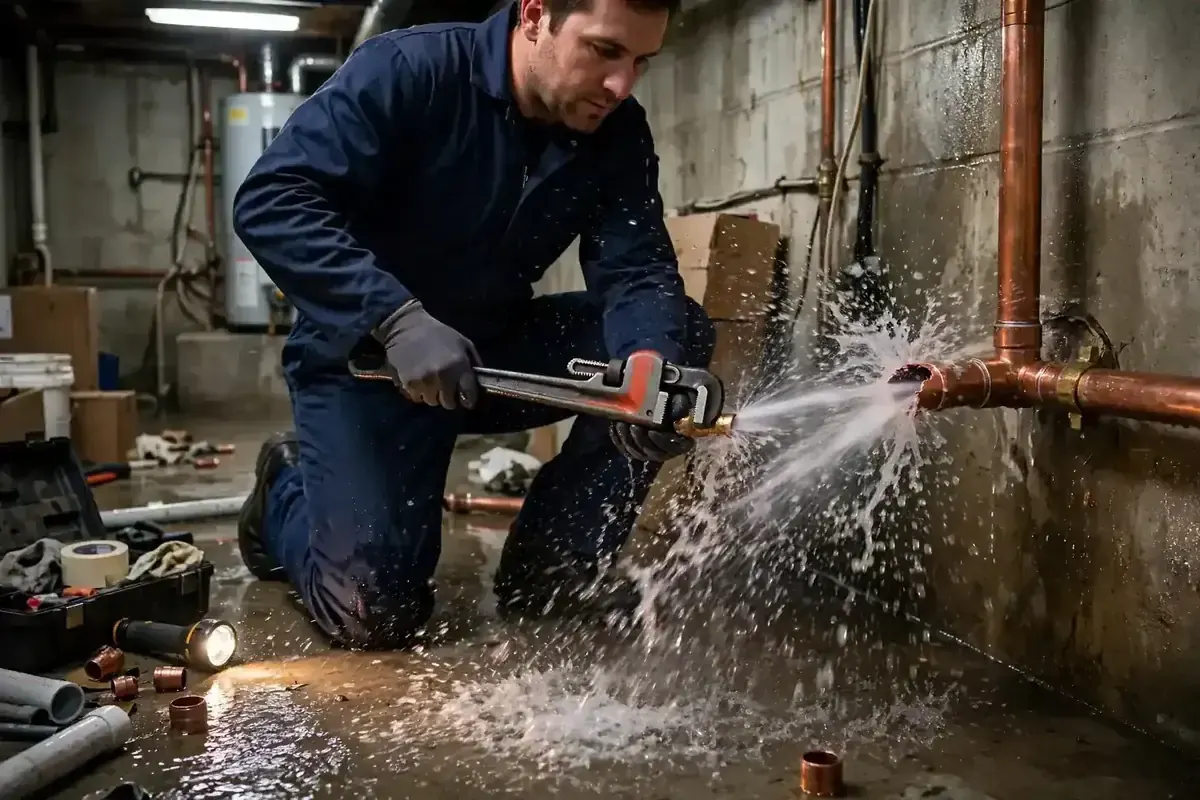
Common causes of water damage in Evanston
Evanston's defining risk is its combined sewer system: all 144 miles are combined, and most pipes are a foot or less in diameter — fine for sanitary flow, overwhelmed by stormwater. Intense rain surcharges the system and pushes sewage backup into basements. The $210 million program (1990–2008) reduced street-level flooding, but overflows still occur in major storms, as April 2013 showed on Central Street.
Geography adds pressure from two sides. Lake Michigan forms the east border, bringing lakefront flood zones and high-water risk, while the North Shore Channel runs through the west side. The city's pre-settlement terrain was wetlands and swampy forest — low, flat ground that still collects water.
Winter attacks from below: with 52 of 157 miles of water pipe over a century old, Evanston averages 25 to 50 main breaks a year, most in winter. The housing stock concentrates the risk — Tudor and Colonial Revival homes, 1920s courtyard apartments and converted elevator buildings, and two-flats with vintage plumbing and shared drains, where one backup can affect multiple units.
Our Evanston water damage services
Water extraction:
Truck-mounted and portable extractors for sewer-backed-up basements, burst-main flooding, and lakefront storm intrusion — from single-family homes to vintage courtyard buildings.
Structural drying:
Industrial air movers and dehumidifiers, verified with moisture meters — essential for 1920s plaster and masonry that hold moisture.
Mold remediation:
In century-old housing with original plaster, mold establishes within days. We contain, remove, and treat to IICRC standards.
Sewage cleanup:
Combined-sewer backup is Evanston's signature event — the 1987 storm put four to five feet of it in basements. For Category 3 water, we run full containment, disinfect thoroughly, and remove unsalvageable materials.
Storm damage repair:
From cloudburst flooding to winter main breaks, we stabilize the structure, dry it out, and coordinate repairs.
Areas we serve across Evanston
We respond citywide — 60201, 60202, and 60203: North and Northeast Evanston, the Central Street corridor, Downtown, and South Evanston, including the lakefront and the North Shore Channel areas. We work near Northwestern University, in vintage courtyard apartments and converted 1920s elevator buildings, Tudors and Colonial Revivals, and ranch homes and two-flats throughout the city.
Cost factors & insurance claim help
We don't do one-size pricing — every Evanston loss is scoped on site. Cost hinges on how much water came in, how far it spread, whether combined-sewer contamination demands tear-out, and how vintage materials take to drying. You get a written, itemized scope before work proceeds. We coordinate with your insurer from the start, too — moisture logs, photo timelines, and detailed line items — so your claim moves without you playing translator.
How We Restore Water-Damaged Homes in Evanston
- Emergency dispatch, 24/7. Call (773) 200-3228 — we assess the water category, critical with combined-sewer backup, plus affected materials and hazards.
- Extraction. Standing water comes out first; every hour it sits multiplies damage, especially contaminated water.
- Drying with verification. Equipment runs until moisture meters confirm plaster, framing, and masonry are genuinely dry.
- Cleaning and sanitizing. Contaminated surfaces disinfected; salvageable contents cleaned and documented.
- Mold prevention or remediation. Antimicrobial treatment where needed; full remediation if mold has taken hold.
- Repairs and claim documentation. We coordinate repairs and compile photos, moisture logs, and itemized records for your insurer.
Evanston water damage FAQs
What happened in August 1987, and could it happen again? On August 13–14, 1987, nearly 10 inches fell in less than a day, filling basements with four to five feet of sewage water, per the former public works director. It was part of Chicago's wettest month ever, with $220M+ in area damage. The $210 million sewer program reduced street-level flooding, but overflows still occur in major storms — the risk is reduced, not gone.
What did the $210 million sewer program actually build? Approved in 1990 and completed in 2008, the program installed flow restrictors, nine miles of shallow tunnels, relief combined sewers, and 43 miles of sewer mains. It cut street-level flooding substantially — but in major storms like April 2013, the system can still surcharge, as the popped manhole covers on Central Street showed.
I live near Northwestern — did campus flooding affect surrounding neighborhoods? Yes. On April 18, 2013, over 4 inches fell in one night: 15 Northwestern residential halls and 10 sorority houses flooded, and the city logged 80+ basement complaints plus 50+ street and alley reports. Nearby rentals share the same combined sewers — when the system surcharges, surrounding homes flood too.
My building is a 1920s courtyard apartment. What are the risks? Vintage courtyard and converted elevator buildings often share drainage stacks and carry aging supply and waste lines. One backup can affect multiple units, and plaster-and-lathe walls hide moisture far longer than drywall. We dry with moisture-meter verification and document common-area versus unit damage.
What's the story with Evanston's 100-year-old water mains? Fifty-two of the city's 157 miles of water pipes are over a century old, and 25 to 50 main breaks occur per year — most in winter. A break near your home can flood basements with little warning — call (773) 200-3228 immediately in winter.
Should lakefront homeowners worry about Lake Michigan high water? Evanston's east border is the lake, with FEMA lakefront flood zones and high-water risk — and the city's low, formerly wetland terrain drains slowly. Lakefront homes face shoreline high water plus the city's combined-sewer surcharge risk.
Water Damage in Evanston? We Respond 24/7
Every minute counts. Rapid Water Damage Restoration Illinois dispatches certified technicians across Evanston day and night — with insurance documentation handled for you.
Call (773) 200-3228 NowWhat Evanston Customers Say
A review from a customer in Evanston.
★★★★★
24/7 lifesavers
Our water heater burst on a Sunday night. Rapid Water Damage Restoration Illinois answered immediately and had a technician out within the hour. They handled the extraction, sanitizing, and even helped us document everything for the claim. True lifesavers.
Water Damage Restoration Services in Evanston
- Our water damage restoration service
- Commercial Water Damage Restoration in Evanston
- Residential Water Damage Restoration in Evanston
- Emergency Flood Cleanup in Evanston
- Storm & Flood Damage Restoration in Evanston
- Ceiling & Wall Water Damage Repair in Evanston
- Sewage Backup Cleanup in Evanston
- Mold Remediation in Evanston
- Burst Pipe & Leak Water Damage in Evanston
- Drying & Dehumidification in Evanston
Nearby Areas We Serve Around Evanston
Helpful Water Damage Guides
- What to Do When Your Basement Floods: A Step-by-Step Emergency Guide
- Does Homeowners Insurance Cover Water Damage in Illinois?
Official resources: FEMA FloodSmart (flood insurance) and EPA guide to mold and moisture.