South Shore has two water problems, and they come from opposite directions. From the east, Lake Michigan delivers 23-foot-wave storms: on January 10–11, 2020, they slammed the shoreline, flooding streets, sweeping away beaches, and causing $25 million in damage in Chicago plus $12 million elsewhere in Cook County; Governor Pritzker declared a state disaster. The lake had risen nearly 6 feet from its 2013 record low to near-record highs by 2019–2020.
The lakefront high-rises took direct hits: one South Shore Drive co-op voted emergency measures — tearing out a damaged terrace, filling it with rubble and concrete block, sandbagging a courtyard — while another spent roughly $26,000 per unit hardening doors, windows, vapor barriers, and drywall after water pushed straight through brick. The 1893 Columbian Exposition gave South Shore grander housing than most of the South Side — mansions, bungalows, apartments, from the 229-home Bungalow Historic District (1911–1930) to the high-rise co-ops.
From the west, the inland blocks share the South Side's combined-sewer backup risk — the July 2023 flood's 70,000-plus flooded basements proved it citywide. The Delta Institute's Resiliency Plan targets the hardest-hit blocks, 67th to 79th from Exchange/Oglesby to the lake. Whichever direction the water comes from, call (773) 200-3228.
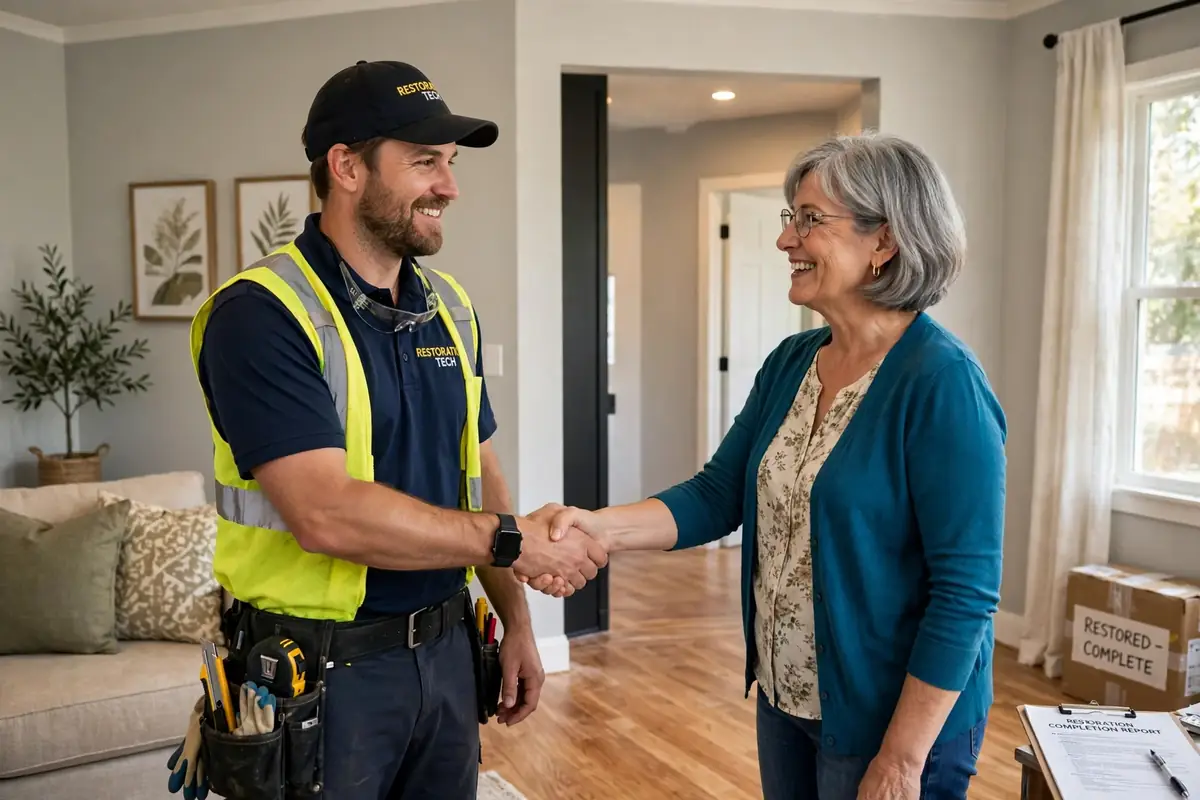
How We Restore Water-Damaged Homes in South Shore
- Emergency dispatch, 24/7: Call (773) 200-3228 — we arrive with extraction and drying equipment, whether the water came from the lake or the sewer system.
- Source diagnosis: Lake-driven intrusion and sewer backup look similar when they're in your living room — we determine which one (or both) reached you, because the contamination and insurance picture differ.
- Extraction and containment: Standing water comes out first; contaminated areas are contained and disinfected.
- Monitored drying: Industrial dehumidification for everything from bungalow plaster to high-rise concrete and drywall, verified with moisture meters.
- Repairs and final walkthrough: Damaged finishes are restored to pre-loss condition, with documentation your insurer — or your co-op board — can work with.
Common Causes of Water Damage in South Shore
- Lake-driven storm waves: 23-foot waves and near-record lake levels (2019–2020) overtop revetments, flood streets, damage facades and terraces, and push water through brick into lakefront buildings.
- Combined sewer backup (inland blocks): Away from the shore, heavy rain surcharges the combined sewers and backs sewage through basement floor drains — the South Side's dominant flood mechanism.
- Shoreline erosion and spray: High water chews away beaches and protective barriers; wind-driven spray in winter damages facades, terraces, and ground-level units.
- Vintage plumbing and basements: 1911–1930 bungalows with original plumbing, uninsulated rim joists, and basement utilities on exterior walls — the classic freeze-burst profile.
- Winter freeze and ice: Wind-driven cold off the lake freezes exposed plumbing; lake-effect cold snaps can freeze sump-pump discharge lines, flooding basements even blocks from the water.
Our South Shore Water Damage Services
Water extraction:
Fast removal of standing water from lakefront units, bungalows, and courtyard buildings — including ground-floor units hit by wave-driven intrusion.
Structural drying and dehumidification:
Monitored drying calibrated for both masonry high-rises and vintage bungalows, verified with meters.
Mold remediation:
Contained removal from damp basements, wall cavities, and lake-exposed units, with the moisture source addressed.
Sewage cleanup:
Full Category 3 cleanup after combined-sewer backups on the inland blocks — extraction, sanitization, and safe disposal of contaminated materials.
Storm damage repair:
Repairs for shoreline-storm damage — facades, terraces, windows, and water intrusion at foundations — plus roof leaks and wind-driven rain.
Areas We Serve
We serve all of South Shore in ZIP 60649: the lakefront corridor from 67th to 79th Street; the South Shore Bungalow Historic District; Jackson Park Highlands; the South Shore Cultural Center grounds (the former South Shore Country Club); Rainbow Beach and Rainbow Beach Park; the 71st Street commercial corridor; Jackson Park and the Barack Obama Presidential Center site; and the inland blocks west to Stony Island Avenue.
Cost Factors & Insurance Claim Help
Costs depend on the water source and category (lake storm water vs. contaminated sewer backup), the area affected, how long materials stayed wet, and the building type — a high-rise unit and a historic bungalow dry very differently. We inspect before quoting and document with photos and moisture logs so your adjuster — or your co-op board's assessment process — has a complete file. We work directly with insurance companies from the first call to the final walkthrough. Call (773) 200-3228 to get started.
Frequently Asked Questions
Can 23-foot waves really reach South Shore buildings?
Yes — they did in January 2020. Waves that high slammed the shoreline on January 10–11, flooding streets, sweeping away beaches, and pushing water into lakefront buildings; Chicago took $25 million in damage. Co-ops on South Shore Drive responded with emergency measures like sandbagged courtyards and rubble-filled terraces. When the lake runs near record highs, wave overtopping is a building-level threat.
How do I know whether my water damage came from the lake or the sewer system?
Look at the path. Lake-driven damage enters from the east — facades, terraces, ground-floor units facing the shore, often with sand or debris patterns. Sewer backup enters from below — basement floor drains and low fixtures, often with a sewage odor. The distinction matters: contamination level and insurance treatment differ, so we document the source on every job.
One co-op spent $26,000 per unit after a storm — what were they fixing?
After water pushed through brick in the high-lake years, that building installed hurricane-proof doors and windows, vapor barriers, and new drywall — roughly $26,000 per unit. It's the price of hardening a lakefront building against wave-driven intrusion, and it shows why lakefront damage escalates faster than most inland floods.
What is the South Shore Resiliency Plan?
A Delta Institute planning effort focused on the historically hardest-hit blocks — 67th to 79th Street, from Exchange/Oglesby avenues to the lake — targeting coastal erosion and flooding mitigation. It sits alongside the city's shoreline defenses: 5,000 feet of jersey barriers across eight lakefront sections and a rip-rap barrier near the Obama Presidential Center site in Jackson Park.
Why did Lake Michigan rise so much between 2013 and 2020?
The lake climbed nearly 6 feet from its 2013 record low to near-record highs by 2019–2020 — about 3 feet above average in late 2019, just under the November record. High water plus winter storms chewed away beaches and revetments, which is why shoreline damage spiked in those years even without a single named hurricane.
Does the lake make winter freeze risk worse in South Shore?
In two ways. Wind-driven cold off the lake freezes exposed plumbing faster, and winter storms bring ice and spray that damage facades, terraces, and ground-level units. Inland, lake-effect cold snaps can freeze sump-pump discharge lines — so even homes blocks from the water need freeze-proof discharge routing and backup power.
Call South Shore's Water Damage Restoration Team
Shoreline storm or sewer backup — South Shore's water comes from two directions, and we know how to fight both. Call (773) 200-3228 now for 24/7 emergency service.
Rapid Water Damage Restoration Illinois is a locally owned Illinois water damage restoration company, available 24/7 for emergencies. Our IICRC-trained technicians handle water extraction, structural drying, mold remediation, and sewage cleanup — and we work directly with your insurance company from first call to final walkthrough. Call (773) 200-3228 anytime, day or night.
Water Damage in South Shore, Chicago? We Respond 24/7
Every minute counts. Rapid Water Damage Restoration Illinois dispatches certified technicians across South Shore, Chicago day and night — with insurance documentation handled for you.
Call (773) 200-3228 NowWater Damage Restoration Services in South Shore
- Our water damage restoration service
- Commercial Water Damage Restoration in South Shore
- Residential Water Damage Restoration in South Shore
- Emergency Flood Cleanup in South Shore
- Storm & Flood Damage Restoration in South Shore
- Ceiling & Wall Water Damage Repair in South Shore
- Sewage Backup Cleanup in South Shore
- Mold Remediation in South Shore
- Burst Pipe & Leak Water Damage in South Shore
- Drying & Dehumidification in South Shore
Nearby Areas We Serve Around South Shore
Helpful Water Damage Guides
- Sewage Backup Cleanup: Health Risks & Pro Help
- How to Prevent Frozen and Burst Pipes During an Illinois Winter
Official resources: FEMA FloodSmart (flood insurance) and EPA guide to mold and moisture.