Avondale's most famous flood wasn't caused by a river — it was caused by a city program. After a 2007 downpour dumped 4 inches of rain in 45 minutes, more than 1,000 Chicago homes flooded, and the Water Department took hundreds of flooded-basement reports plus 300 flooded-street reports. The city's answer had been its $75 million "rain blocker" program — 4-inch grates fitted into catch basins to hold water in the street so the sewers wouldn't surcharge into basements. Then-Ald. Richard Mell of the 33rd Ward, which includes Avondale, publicly questioned the program after his own basement flooded with water overflowing from the streets. Nearly 800 of the devices were later removed at residents' request.
The rain-blocker tradeoff is Avondale's signature sewer story because it maps exactly onto the housing: about half of Avondale's stock is two- and four-flat buildings, per the DePaul Institute for Housing Studies, with the rest frame single-family homes, small apartment buildings, and newer infill. Those 1900s–1920s frame two- and four-flats run supply and waste stacks through unheated basement stairwells and exterior chase walls, and vintage galvanized pipe freeze-splits at elbows and threaded joints in sustained sub-zero cold. Garden-level rentals — plumbing in cold perimeter cavities with minimal insulation — sit exactly where pooled street water pours through basement windows. The August 2007 storms added another lesson: over 4 inches with 70+ mph winds, plus a separate 2.35-inch rain that flooded basements across the metro as outages killed sump pumps — this stock needs battery backups.
Avondale also sits inside the federal disaster footprints of September 2008 (FEMA DR-1800) and April–May 2013 (FEMA DR-4166). The 2008 storm dropped 2.39–10.51 inches over 51 hours; April 2013 was the wettest April on record, with the river reversing into Lake Michigan. Call (773) 200-3228 — emergencies are our priority, day or night.
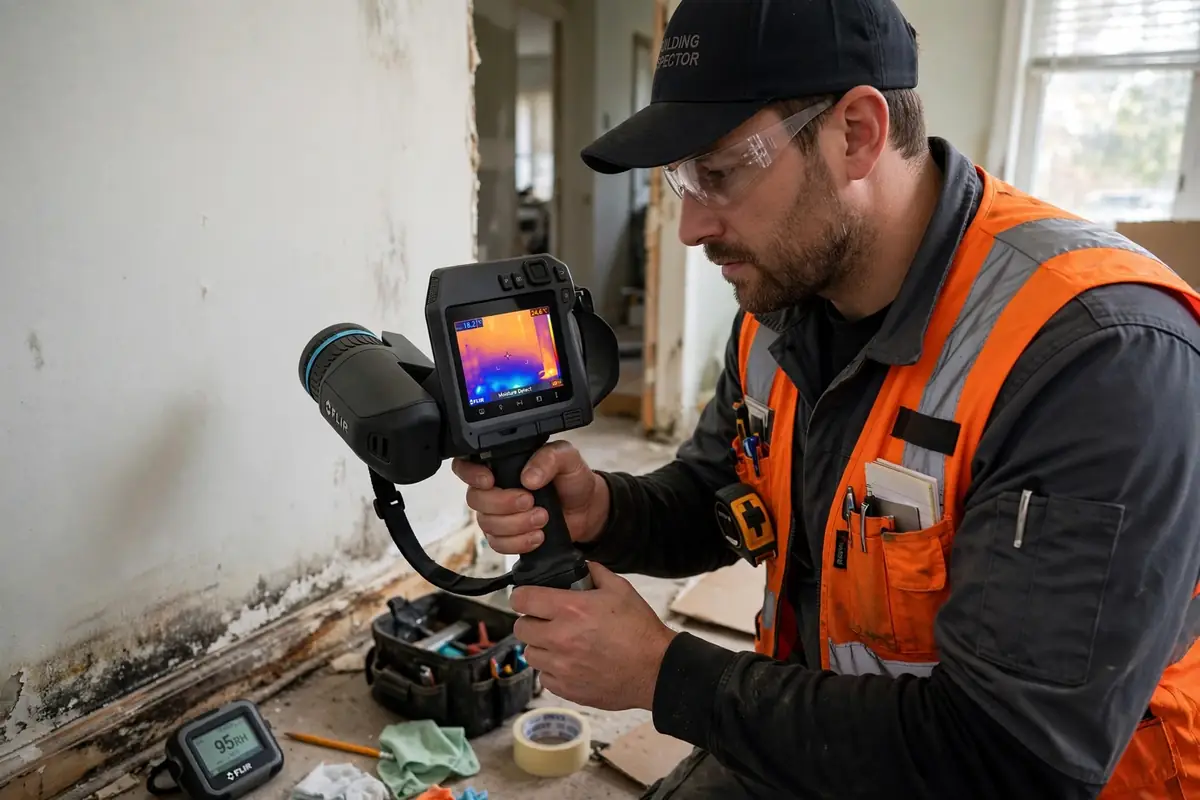
Common Causes of Water Damage in Avondale
- Street-ponding runoff: The rain-blocker era's hard lesson — water held in the streets pours through basement windows and below-grade entries of frame two- and four-flats. Even without the devices, Avondale's streets still pond deeply in cloudbursts.
- Combined-sewer surcharge: Heavy rain overwhelms the shared system, pushing water back through floor drains and low fixtures in garden-level units — the dominant basement-flood mechanism in the frame-flat stock.
- Power-outage sump failure: The August 2007 outages proved the pattern: no power, no pump, flooded basement. Battery backups are essential for below-grade garden rentals.
- Frozen and burst pipes: Supply and waste stacks through unheated basement stairwells and exterior chase walls; vintage galvanized pipe freeze-splitting at elbows and threaded joints; garden-unit plumbing in cold perimeter cavities with minimal insulation.
- Extreme rainfall events: The 4-inches-in-45-minutes 2007 downpour, September 2008's 51-hour deluge, and the wettest April on record in 2013 all fall within Avondale's disaster footprint.
Our Avondale Water Damage Services
Water extraction:
Truck-mounted pumps and submersibles for flooded garden units and full basements — with Category 3 containment when the water came through drains or off the street.
Structural drying and dehumidification:
Industrial equipment calibrated for 1900s–1920s frame construction, monitored with moisture meters until wood framing tests genuinely dry.
Mold remediation:
Contained removal from garden units and basements that sat damp after surcharge or runoff events, plus the moisture source feeding it.
Sewage cleanup:
Full sanitization after combined-sewer backups; porous materials that contacted sewage are removed per protocol.
Burst pipe repair and dry-out:
Freeze-split galvanized lines at elbows and threaded joints, repaired and dried completely.
How We Restore Water-Damaged Homes in Avondale
- Emergency call and assessment: We answer 24/7 and arrive with extraction gear, mapping every affected area — garden units, basements, and chase walls.
- Extraction and containment: Standing water is removed fast; for sewage backups, containment and protective protocols come first.
- Drying and monitoring: Equipment is placed for frame construction and checked daily until moisture readings confirm true dry.
- Cleaning and sanitization: We clean affected surfaces and disinfect contaminated areas to IICRC standards.
- Repairs and restoration: we repair or replace damaged drywall, flooring, and finishes to pre-loss condition.
Cost Factors & Insurance Claim Help
We price from the loss itself, not a menu. Scope depends on the water's category (clean pipe water versus contaminated sewer backup or street runoff), how many units and levels are affected — multi-flat buildings often mean multiple tenants — how long materials sat wet, and whether frame construction needs specialized handling. We document everything with photos and moisture readings, building the record your adjuster needs. We deal with your insurance company directly, from the first call to the final walkthrough. Call (773) 200-3228 — documentation and drying start on the same visit.
Areas We Serve in and Around Avondale
We cover ZIP codes 60647 and 60639, with northern blocks in 60618: the Milwaukee Avenue diagonal — the historic route Polish immigrants followed northwest; St. Hyacinth Basilica at 3635 W. George St.; Kosciuszko and Kilbourn Parks; the Kennedy Expressway and Blue Line corridor; and the Logan Square border.
Frequently Asked Questions
What were the rain blockers, and why does Avondale still talk about them?
The city's $75 million program fitted 4-inch grates into catch basins to hold water in the streets so sewers wouldn't surcharge into basements. After the 2007 downpour — 4 inches in 45 minutes — pooled street water poured through basement windows instead. Then-Ald. Richard Mell publicly questioned the program after his own basement flooded, and nearly 800 devices were removed at residents' request.
My garden-level rental flooded from the street. Whose problem is it?
Landlords are generally responsible for the building's structure and systems; tenants should document belongings damage immediately and notify the landlord in writing. Call us either way — we extract and dry the space, and our photos help both sides with claims.
Why do Avondale's two-flats flood more than newer buildings?
About half the stock is 1900s–1920s two- and four-flats with below-grade garden units, aging plumbing in cold chases, and foundations that predate modern waterproofing. Infill buildings have sump systems and sealed foundations; the frame flats don't — and their garden units sit exactly where street runoff and sewer surcharge converge.
My sump pump died during a power outage. How do I prevent a repeat?
The August 2007 storms knocked out power across the metro and killed sump pumps mid-rain. A battery backup keeps the pump running through outages — the single most important upgrade for a below-grade garden unit.
Are Avondale basements covered by federal disaster declarations?
Avondale falls within the federal disaster footprints of September 2008 (FEMA DR-1800) and April–May 2013 (FEMA DR-4166). Declarations can unlock aid programs, but day-to-day surcharge flooding is handled through insurance — which is why documentation from the first hour matters.
Water Damage in Avondale, Chicago? We Respond 24/7
Every minute counts. Rapid Water Damage Restoration Illinois dispatches certified technicians across Avondale, Chicago day and night — with insurance documentation handled for you.
Call (773) 200-3228 NowWater Damage Restoration Services in Avondale
- Our water damage restoration service
- Commercial Water Damage Restoration in Avondale
- Residential Water Damage Restoration in Avondale
- Emergency Flood Cleanup in Avondale
- Storm & Flood Damage Restoration in Avondale
- Ceiling & Wall Water Damage Repair in Avondale
- Sewage Backup Cleanup in Avondale
- Mold Remediation in Avondale
- Burst Pipe & Leak Water Damage in Avondale
- Drying & Dehumidification in Avondale
Helpful Water Damage Guides
- What to Do When Your Basement Floods: A Step-by-Step Emergency Guide
- How to Prevent Frozen and Burst Pipes During an Illinois Winter
Official resources: FEMA FloodSmart (flood insurance) and EPA guide to mold and moisture.