Albany Park — Chicago's gateway neighborhood, where about 60% of residents don't speak English at home — boomed after the Ravenswood Elevated reached Lawrence/Kimball: builders raised bungalows and two-flats "at a furious pace," from 7,000 residents in 1910 to over 55,000 by 1930. Then 60625 wrote this group's strongest flood record.
September 2008: 10.51 inches of rain in 51 hours. Then-Congressman Rahm Emanuel toured after "3 straight days of hard rain and a rising river" — "streets, parks, sidewalks, and backyards underneath the floodwaters," 12–15 blocks underwater, 90 billion gallons on the area. April 2013: 5.5 inches in 24 hours; the North Branch overtopped its banks, damaging 70 buildings; the city logged 2,500 "water in basement" calls. Rep. Mike Quigley in 2015: residents "endured their second 100-year flood in a mere 3 years."
The fix: the Albany Park Stormwater Diversion Tunnel — 18 feet in diameter, 150 feet below Foster Avenue, from Eugene Field Park to River Park: Chicago's first tunnel connecting two rivers. Built 2016–2018 for ~$63–70 million, it diverts up to 2,300 cubic feet per second and removed 300+ structures from the 100-year floodplain. It can't empty your floor drains — we can. Call (773) 200-3228.
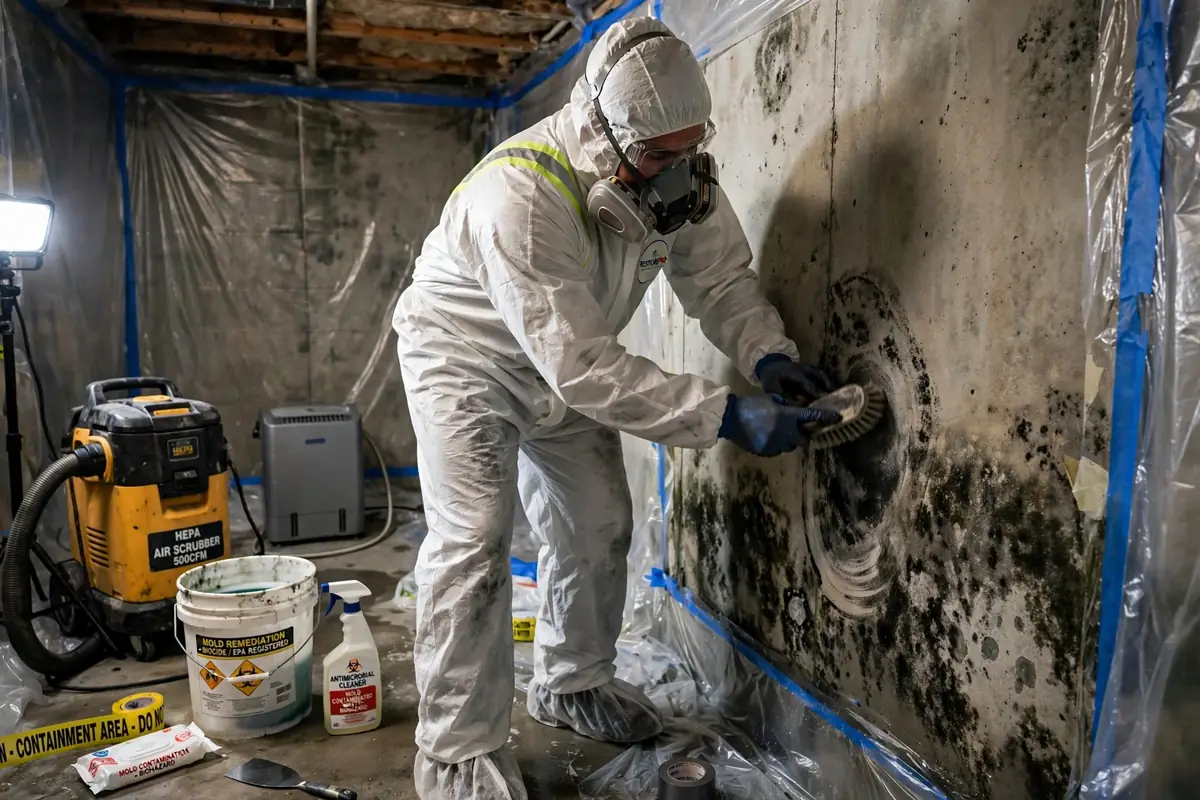
Common causes of water damage in Albany Park
The signature cause is riverine: the North Branch of the Chicago River overtopping its banks, as in 2008 and 2013, when floodwater covered streets, parks, and backyards across a dozen-plus blocks. The diversion tunnel now intercepts up to 2,300 cubic feet per second before flood stage — but the river still runs past the neighborhood's eastern edge.
The second cause is the combined sewer system — the one the tunnel doesn't fix. It backs up into bungalow floor drains when the North Branch crests, which is why 2022's damage came up through drains with the tunnel already in place.
The third is the housing stock itself: 1910s–20s bungalows and two-/three-flats with full basements, aging clay-tile laterals, and a century of settlement and root intrusion — vintage plumbing at sewer-surcharge elevation.
In winter, Albany Park's older bungalows face burst-pipe risk in unheated rear additions and attics, and frozen sump discharge lines defeat pumps exactly when snowmelt runs hardest.
Albany Park water damage FAQs
Did the $63–70 million tunnel fix Albany Park's flooding? It fixed riverine flooding: the tunnel relieved 300+ residential structures from the 100-year floodplain and diverts up to 2,300 cubic feet per second before flood stage. What it doesn't fix is combined-sewer backup — the floor-drain flooding seen again in September 2022. For that, you need a restoration crew. Call (773) 200-3228.
How does the diversion tunnel actually work? An intake shaft at a bend in the North Branch in Eugene Field Park (just east of Pulaski) feeds an inverted siphon running 150 feet below Foster Avenue, 1.4 to 1.6 miles east to an outlet shaft at River Park that empties into the North Shore Channel. It's the first tunnel in Chicago to connect two existing rivers — bored 2016–2018 through dolomite limestone.
My floor drain backed up during a storm. Is that river water or sewage? Sewage — the combined flow of sewage and stormwater. When the North Branch crests, the shared pipes surcharge and push that mix up through drains. River flooding enters from outside, over the banks; sewer backup rises from inside, through your plumbing. Different protocols, different insurance documentation — we handle both.
How did two "100-year floods" hit three years apart? Because "100-year flood" describes probability, not a schedule. Rep. Mike Quigley said it himself in 2015: his district's residents had "endured their second 100-year flood in a mere 3 years" — the 2008 and 2013 events. Plan for the next one, not the odds.
What should I check before the next big rain? Test your sump pump, keep the discharge line clear, and have any backwater valve inspected. When heavy rain is forecast, follow MWRD's Overflow Action guidance and cut household water use. And save our number: (773) 200-3228.
I rent a basement unit in Albany Park. What should I know? Basement units sit at sewer-surcharge elevation, so they're the first to flood. Document everything with photos the moment water appears, notify your landlord in writing, and know that your renter's insurance — not your landlord's policy — covers your belongings. We work with both property owners and tenants, and we document the water's source and category for everyone's records.
How We Restore Water-Damaged Homes in Albany Park
- Source identification first. North Branch overbank flooding, combined-sewer backup, seepage, or burst pipe — we determine the water's source and category before anything else.
- Emergency extraction. Standing water is removed immediately, with Category 3 containment for sewage backup.
- Moisture mapping and drying. Meters and thermal imaging find hidden damp in century-old brick, plaster, and framing; industrial equipment dries to verified readings.
- Sanitizing and mold remediation. Contaminated areas are disinfected; mold in vintage assemblies is contained and remediated to IICRC standards.
- Documentation and repair coordination. Photos, moisture logs, and itemized records for your insurer or landlord, plus coordinated repairs.
Our Albany Park water damage services
Water extraction:
Rapid removal from bungalow full basements, two-/three-flat lower units, and vintage walk-ups along the corridors.
Sewage cleanup:
Full Category 3 containment, extraction, and disinfection for combined-sewer backups — the neighborhood's most common loss.
Structural drying and dehumidification:
Calibrated drying for 1910s–20s brick, plaster, and wood framing, verified with moisture meters.
Mold remediation:
Containment and remediation for wall assemblies that sat in flood or backup water.
Storm and river-flood response:
From North Branch overbank events to flash-flood sewer surcharge and burst pipes — stabilized, dried, documented, and coordinated for repairs.
Areas we serve in Albany Park (60625)
We serve the full 60625 ZIP — Bryn Mawr (north), Montrose (south), the North Branch (east), Pulaski (west) — including Eugene Field Park (the tunnel's intake), River Park (its outlet), and Ronan Park; the Lawrence and Foster Avenue corridors; the Kimball/Lawrence Brown Line terminal; and Kedzie and Pulaski.
Cost factors & insurance claim help
Riverine and sewer losses differ in scope: the water's category, how many rooms it reached, whether contamination requires material removal, and owner-tenant coordination in multi-unit buildings all matter. We never quote prices sight unseen. What we provide is a verified record: photos, moisture logs, and itemized scopes that give your adjuster (and your landlord, if you rent) the full picture from the first call. We work directly with insurance companies from first call to final walkthrough. Call (773) 200-3228 to talk through your situation.
Water Damage in Albany Park, Chicago? We Respond 24/7
Every minute counts. Rapid Water Damage Restoration Illinois dispatches certified technicians across Albany Park, Chicago day and night — with insurance documentation handled for you.
Call (773) 200-3228 NowWater Damage Restoration Services in Albany Park
- Our water damage restoration service
- Commercial Water Damage Restoration in Albany Park
- Residential Water Damage Restoration in Albany Park
- Emergency Flood Cleanup in Albany Park
- Storm & Flood Damage Restoration in Albany Park
- Ceiling & Wall Water Damage Repair in Albany Park
- Sewage Backup Cleanup in Albany Park
- Mold Remediation in Albany Park
- Burst Pipe & Leak Water Damage in Albany Park
- Drying & Dehumidification in Albany Park
Nearby Areas We Serve Around Albany Park
Helpful Water Damage Guides
Official resources: FEMA FloodSmart (flood insurance) and EPA guide to mold and moisture.