Under the west side of Route 83, between St. Charles Road and North Avenue, sits one of the largest non-federal flood-control reservoirs in the country: the Elmhurst Quarry, opened in 1996, with room for 2.7 billion gallons of Salt Creek floodwater. When the creek surges past the trigger gage near Harger Road, water diverts at a weir, drops 80 feet down a "vortex drop chute," and travels 400 feet beneath Route 83 into the quarry. It has filled to capacity once: September 12–14, 2008, when more than 10 inches of rain fell and Salt Creek rose 8 feet in two days at Wood Dale; it took 72 days to drain the water. The quarry was the county's answer to the August 1987 storm, when 10 inches of rain pushed Salt Creek over its banks. But it only handles river water — and Elmhurst's hardest recent flood needed no river at all: on July 23–24, 2010, nearly 7 inches fell in 12 hours, a greater-than-100-year intensity that flooded hundreds of homes and backed up sanitary sewers. When water reaches your home in Elmhurst, Rapid Water Damage Restoration Illinois answers 24/7. Call (773) 200-3228.
Our Elmhurst water damage services
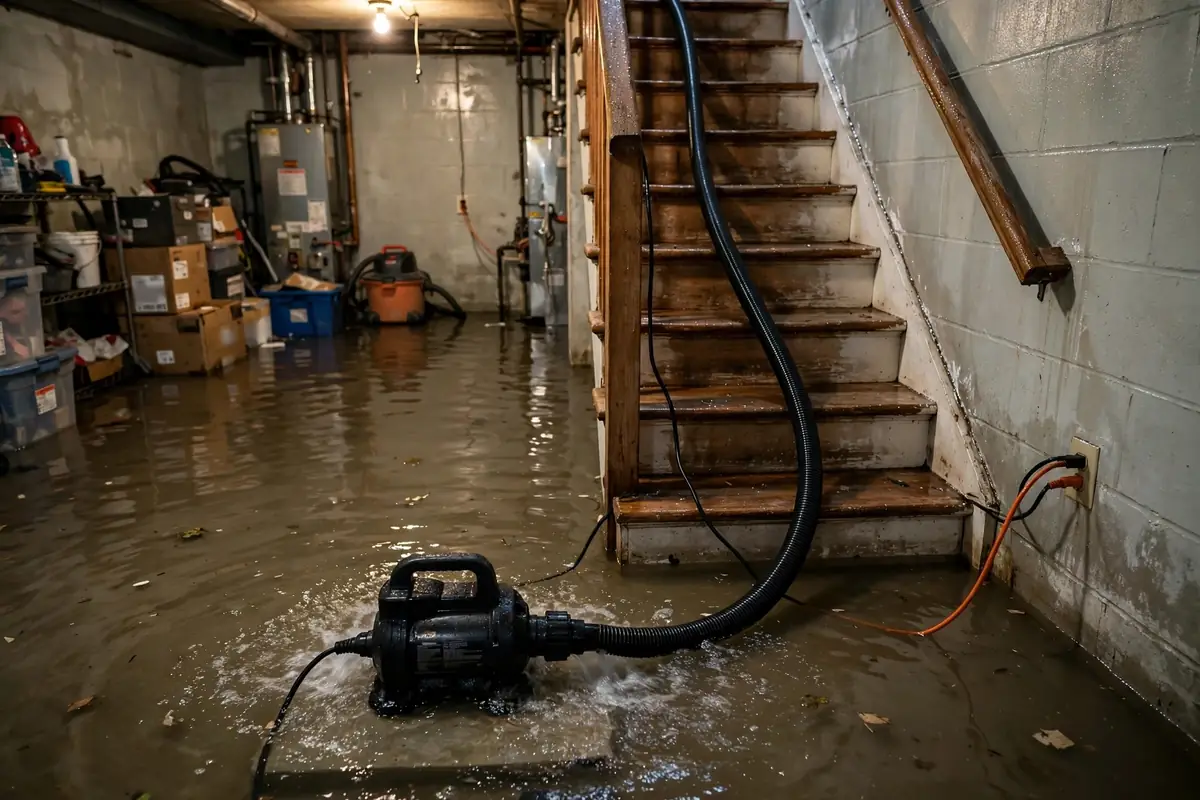
Water extraction
Salt Creek overbank, system overload, sewer backup, or a burst pipe in a pre-1960 brick home — high-capacity pump-out with containment.
Structural drying
Monitored drying for classic brick homes, split levels, and new rebuilds — metered and verified, never by touch.
Mold remediation
IICRC-standard containment, removal, and treatment for mold after basement flooding.
Sewage cleanup
The 2010 flood proved stormwater can drive sanitary sewer backups; we extract category-3 water in full PPE, remove contaminated materials, and disinfect surfaces.
Storm damage repair
Wind- and hail-opened roofing, siding, and windows are secured; intrusions are extracted, dried, and rebuilt to pre-loss condition.
Common causes of water damage in Elmhurst
- Salt Creek. It flows through Elmhurst's east side along the Route 83 corridor, a Des Plaines River tributary draining about 117 square miles. In August 1987, 10 inches of rain pushed it over its banks; in September 2008, it rose 8 feet in two days at Wood Dale.
- System overload — not just river overbank. On July 23–24, 2010, nearly 7 inches fell in 12 hours — over 100-year intensity at the USGS gage — and storm sewers and pumping stations couldn't handle the runoff; hundreds of homes flooded. In April 2013, Salt Creek never overtook the levee; the city said all flooding came from more water entering the system than it could handle.
- Sanitary sewer backups. In 2010, stormwater entered the sanitary system and backed sewage into homes — an inflow/infiltration profile the city's flood plan addressed across ten flood problem areas.
- The quarry's limits. The Elmhurst Quarry has filled to capacity only once — September 2008. It handles river water diverted at the weir near Harger Road; it cannot stop a July-2010-style deluge.
- An older — and rebuilding — housing stock. Median year built 1964, with 44.6% of homes predating 1960, alongside a teardown wave (22.8% built since 2000). Aging lines and old foundations meet new-construction excavation exposure.
- Record wet seasons and ongoing work. May 2020 was the Chicago area's wettest May on record. Ongoing mitigation: the ARPA-funded Southwest Elmhurst Stormwater Mitigation Project, levee certification near Spring Road and Eggleston Avenue, and pump-evacuated underground storage with backflow preventers.
Our Elmhurst restoration process
- Round-the-clock emergency response. Call (773) 200-3228 — we roll with extraction equipment, prioritizing active flooding and backups.
- Finding where the water came from. Salt Creek overbank, system overload, sewer backup, or a burst line — the source sets the protocol and frames your claim.
- Removing standing water fast. Truck-mounted and portable extraction clears the structure; contaminated water is contained.
- Drying to verified targets. Dehumidifiers and air movers run until moisture meters confirm every material is dry.
- Cleaning, repair, and claim paperwork. Flood- and sewage-contacted surfaces are sanitized, finishes rebuilt to pre-loss condition, and everything is photographed and logged for your insurer.
Areas we serve in Elmhurst
We serve all of Elmhurst in ZIP code 60126, across DuPage and Cook counties: the City Centre downtown, the Spring Road and York & Vallette business districts, neighborhoods along the Salt Creek corridor by Route 83, and Wilder Park (175 S Prospect Ave) — home to the public library, Wilder Mansion, the conservatory, the art museum, and the Mies van der Rohe McCormick House. We also serve Elmhurst University, the historic York Theatre, and the trail corridors. Call (773) 200-3228.
Frequently asked questions
What is the Elmhurst Quarry, and how does it protect the city?
The Elmhurst Quarry Flood Control Facility sits west of Route 83 between St. Charles Road and North Avenue. Opened in 1996 after DuPage County bought the abandoned limestone quarry, its two lobes (120 and 220 feet deep) hold 2.7 billion gallons. In floods, creek water diverts at a weir near Harger Road, drops 80 feet down a vortex drop chute, and travels 400 feet under Route 83.
Salt Creek didn't overtop the levee in April 2013 — so why did homes flood?
The river wasn't the problem: Salt Creek did not overtop the levee, and the city said "all of the flooding problems were related to the fact that there was more water going into our storm water system than it could handle." The county opened the quarry and Spring Creek Reservoir before the flood warning was issued.
What happened on July 23–24, 2010?
Nearly 7 inches of rain in 12 hours at the USGS Salt Creek gage — intensity exceeding a 100-year storm. Storm sewers and pumping stations couldn't handle the runoff; hundreds of homes flooded, with overland flooding and sanitary sewer backups. The city hired Christopher B. Burke Engineering for a flood plan covering ten flood problem areas.
Has the quarry ever filled completely?
Once: September 12–14, 2008, when more than 10 inches of rain fell across DuPage and Cook counties and Salt Creek rose 8 feet in two days at Wood Dale. The quarry filled to its 2.7-billion-gallon capacity — the only time it has done so — and it took 72 days to drain and aerate the water.
Cost factors & insurance claim help in Elmhurst
No flat quotes — every Elmhurst loss is scoped on its facts: the water category (Salt Creek floodwater, stormwater, sewage, or supply water), how much of the structure stayed wet and for how long, and the home's age. Because 2010-style losses can mix river flooding with sewer backup, we sort out flood-insurance versus homeowners coverage (and the sewer-backup endorsement) with you before work begins, documenting everything and coordinating with your insurer from first call to final walkthrough.
Water Damage in Elmhurst? We Respond 24/7
Every minute counts. Rapid Water Damage Restoration Illinois dispatches certified technicians across Elmhurst day and night — with insurance documentation handled for you.
Call (773) 200-3228 NowWater Damage Restoration Services in Elmhurst
- Our water damage restoration service
- Commercial Water Damage Restoration in Elmhurst
- Residential Water Damage Restoration in Elmhurst
- Emergency Flood Cleanup in Elmhurst
- Storm & Flood Damage Restoration in Elmhurst
- Ceiling & Wall Water Damage Repair in Elmhurst
- Sewage Backup Cleanup in Elmhurst
- Mold Remediation in Elmhurst
- Burst Pipe & Leak Water Damage in Elmhurst
- Drying & Dehumidification in Elmhurst
Nearby Areas We Serve Around Elmhurst
Helpful Water Damage Guides
Official resources: FEMA FloodSmart (flood insurance) and EPA guide to mold and moisture.