Before there was a Mount Vernon, there was a swamp. The town was platted on high ground between Casey Creek and the Big Muddy River — two waterways that join south of town in what is now Rend Lake — and in pre-settlement times the surrounding bottomland sat waist-deep in water through winter and wet summers, surrounding the town site on three sides. The swamp was drained and the town grew, but the water never left: the Big Muddy–Casey Creek system still defines local flooding, the National Weather Service routinely issues flood advisories for the Mount Vernon/Rend Lake area, and a USGS station on Casey Fork at Route 37 tracks the creek's levels to this day.
Then there's the wind. On February 19, 1888, a tornado cut a half-mile-wide path through Mount Vernon, killing 37 people and destroying more than 450 houses — including the Jefferson County Courthouse. It became one of the first disasters the American Red Cross ever responded to, with Clara Barton herself directing relief in town. On December 18, 1957, an F4 tornado struck southwest Mount Vernon, leveling prefabricated ranch homes and damaging the Block Grade School. A city with this storm history knows the formula: wind opens the roof, and the next rain finishes the job.
"King City" sits at the crossing of I-57 and I-64 with about 15,000 residents, affordable bungalow-heavy housing, and subdivisions like Birdland, Country Club Estates, Harbortown, and Waterstone. Whether the water arrives as Casey Creek overbank, a flash-flooded street, a backup, or rain through storm damage — call (773) 200-3228. Rapid Water Damage Restoration Illinois answers 24/7.
Areas We Serve in Mount Vernon
We serve all of Mount Vernon in ZIP 62864 (area code 618): the downtown historic district, the subdivisions of Birdland, Country Club Estates, Harbortown, Hausman Manor, Lawrence, Mueller Manor, Parkridge, Saint Charles, Waterford Place, and Waterstone, and the I-57/I-64 commercial corridors. Our crews run past the 1854 5th District Appellate Court building, the 1937 Granada Theatre, Cedarhurst Center for the Arts, and Veterans Memorial Park — and out toward Rend Lake, about 17 miles away. Call (773) 200-3228 and a local crew heads your way.
Common Causes of Water Damage in Mount Vernon
- Casey Creek and Big Muddy flooding. The two waterways that bracketed the pre-settlement swamp still set the local flood pattern — Rend Lake now stores floodwater from the impounded Big Muddy, but NWS flood advisories for the area remain routine.
- Flash flooding on town streets. Thunderstorms flooded Mount Vernon streets on June 5, 2001, and water rescues were conducted near town during the March 9–13, 2006 flood outbreak — the fast, local flooding that fills basements first.
- A tornado history that keeps repeating as water damage. The 1888 tornado and the 1957 F4 are the historic bookends, but every severe storm can strip shingles, break windows, and crack flashing — openings that funnel the next rain inside.
- Older, affordable housing with aging systems. Mount Vernon's bungalow-heavy stock carries aging supply lines, water heaters, and sewer laterals that fail slowly and then all at once.
- Ice-storm power loss and freeze bursts. The New Year's 1999 ice storm coated Mount Vernon in half an inch to an inch of ice with widespread outages, and the January 2009 ice storm knocked power out for days — no heat for days is the classic frozen-pipe setup.
Our Mount Vernon Water Damage Services
Water extraction
High-capacity pumping for creek-influenced basements, flash-flooded lower levels, and storm-opened structures — with containment protocols where stormwater or sewage is involved.
Structural drying
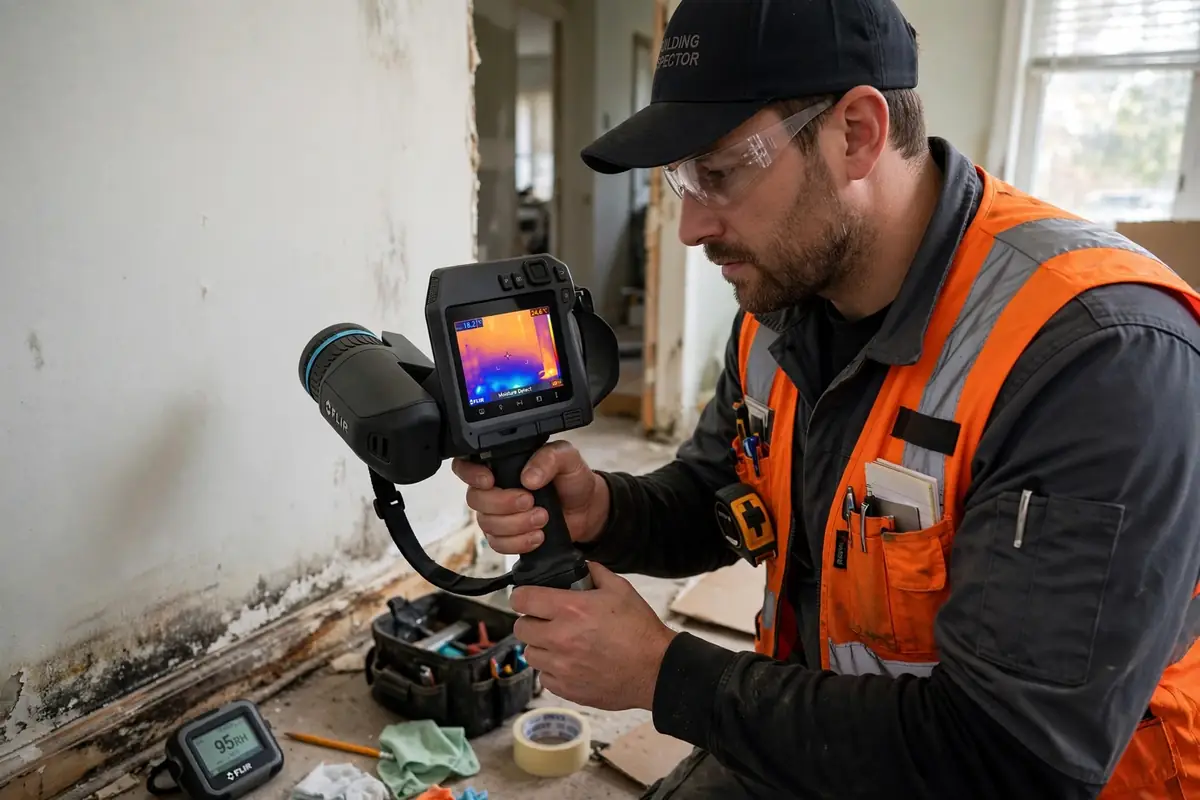
Monitored dehumidification for bungalow, ranch, and newer subdivision construction — moisture meters verify every wall, subfloor, and cavity.
Mold remediation
IICRC-standard containment, removal, and treatment for mold behind drywall, under flooring, and in HVAC-impacted spaces after floods, backups, and slow storm leaks.
Sewage cleanup
When systems surcharge in heavy rain, we extract category-3 water in full PPE, remove contaminated porous materials, and disinfect every affected surface.
Storm damage repair
Tornado- and wind-torn roofing, broken windows, and the water intrusion that follows — we seal the openings, extract the water, dry the structure, and rebuild.
Our Mount Vernon Restoration Process
- Reach out any hour at (773) 200-3228. Active flooding, sewage backup, burst pipes, and storm damage jump the dispatch queue.
- Identify the source and water type. Creek overbank, street flash flooding, sanitary backup, a failed supply line, or rain through wind damage — this sets the protocol and frames your claim.
- Extract fast and isolate contamination. Truck-mounted and portable equipment remove standing water quickly; stormwater and sewage go under full containment from the start.
- Map the moisture, then dry to the numbers. Air movers and dehumidifiers work against mapped targets, with daily meter readings until walls, subfloors, and framing test dry.
- Disinfect and head off mold. Contaminated surfaces are sanitized and damaged porous materials removed before mold colonizes cavities and flooring.
- Restore and document. Finishes rebuilt to pre-loss condition, with photos and moisture logs packaged for your claim.
Cost Factors & Insurance Claim Help
No flat pricing — your Mount Vernon loss is scoped on its facts: the water category (clean supply water versus creek floodwater, stormwater, or sewage), the square footage and materials affected, how long they stayed wet, and whether wind damage adds a roofing or siding scope. Flood and sewer-backup losses hinge on specific policy endorsements, so we review your coverage with you before work begins. We photograph and log everything and work directly with your insurance company from first call to final walkthrough.
Frequently Asked Questions
What happened in the 1888 Mount Vernon tornado?
On February 19, 1888, a tornado cut a half-mile-wide path through Mount Vernon, killing 37 people and destroying more than 450 houses, including the Jefferson County Courthouse. It was one of the first disasters the American Red Cross ever responded to — Clara Barton personally directed relief in town. The lesson endures: tornado damage that isn't sealed before the next rain becomes a water-damage loss. Tarp the openings, photograph everything, and call (773) 200-3228.
I heard Mount Vernon was once surrounded by swamp — does that still matter?
It explains the flooding. The town sits on high ground between Casey Creek and the Big Muddy River, which join south of town in what is now Rend Lake — and in pre-settlement times the surrounding bottomland was waist-deep in water through winter and wet summers. Rend Lake now helps store floodwater, but the NWS still routinely issues flood advisories for the Mount Vernon/Rend Lake area — the same low-lying corridors flood first.
What about the 1957 tornado?
On December 18, 1957, an F4 tornado struck southwest Mount Vernon, leveling prefabricated ranch-style homes — one fatality, 45 injuries — and damaging the Block Grade School. Like 1888, it's a reminder that Mount Vernon's wind history is also a water history: every storm that strips shingles or breaks windows creates openings for the next rain.
What water risks come with Mount Vernon's older, affordable homes?
Many single-family homes here — including 20th-century bungalows priced below $100,000 — carry aging infrastructure: old supply lines, water heaters past their service life, sewer laterals, and older sump systems. An aging water system here is a loss waiting for its trigger.
Why are ice storms a water-damage risk here?
The New Year's 1999 ice storm coated Mount Vernon in ice with widespread outages, and the January 2009 ice storm knocked power out for four to five days in many areas. A house with no heat for days is a frozen-pipe house; when the thaw comes, pipes burst and water flows for hours. Know your main shutoff.
Water Damage in Mount Vernon? We Respond 24/7
Every minute counts. Rapid Water Damage Restoration Illinois dispatches certified technicians across Mount Vernon day and night — with insurance documentation handled for you.
Call (773) 200-3228 NowWater Damage Restoration Services in Mount Vernon
- Our water damage restoration service
- Commercial Water Damage Restoration in Mount Vernon
- Residential Water Damage Restoration in Mount Vernon
- Emergency Flood Cleanup in Mount Vernon
- Storm & Flood Damage Restoration in Mount Vernon
- Ceiling & Wall Water Damage Repair in Mount Vernon
- Sewage Backup Cleanup in Mount Vernon
- Mold Remediation in Mount Vernon
- Burst Pipe & Leak Water Damage in Mount Vernon
- Drying & Dehumidification in Mount Vernon
Nearby Areas We Serve Around Mount Vernon
Helpful Water Damage Guides
- Water Damage From Roof Leaks: Illinois Guide
- Does Homeowners Insurance Cover Water Damage in Illinois?
Official resources: FEMA FloodSmart (flood insurance) and EPA guide to mold and moisture.