Ask a plumber who has worked Jefferson Park since 1981 which storms matter, and you will hear two names: 2010 and 2013. The July 23–24, 2010 record rainstorm and the April 18, 2013 storm — each dropping up to five and a half inches — are the signature flood events for this Northwest Side neighborhood. Chicago's combined sewer system means every serious rainstorm can surcharge sewers and push water — and sewage — back up through basement floor drains.
Jefferson Park sits on the watershed divide between the Chicago River and Des Plaines River systems, in a flat, low-relief glacial plain. The North Branch of the Chicago River runs along the community area's northern edge, but there is little natural drainage relief — flooding here is overwhelmingly a sewer-surcharge and overland-flow problem, not a river leaving its banks. The housing is the classic Northwest Side bungalow belt: Dutch Colonials and brick bungalows with full basements and overhead-sewer retrofits.
Rapid Water Damage Restoration Illinois answers Jefferson Park water emergencies 24/7 — sewer backups, burst pipes, and freeze-thaw damage, fully documented for your insurance claim. Call (773) 200-3228 anytime.
Common Causes of Water Damage in Jefferson Park
- Combined-sewer surcharge. The entire neighborhood sits on Chicago's combined system. When heavy rain overwhelms it, sewage backs up through basement floor drains and low fixtures — the defining flood mechanism on this side of the city.
- Century-old clay laterals. Aging, undersized sewer pipes crack and collapse — and when the municipal main surcharges, water comes up through them into basements.
- Overland flow across flat ground. Jeff Park's flat glacial plain offers almost no drainage relief; once sewers fill, water ponds and flows across streets and yards into the lowest openings.
- Frozen and burst pipes. Vintage 1920s–1950s housing routes supply lines through unheated crawlspaces, porches, and exterior walls; the January 2019 polar vortex (−23°F, wind chills near −52°F) and February 2021 freeze are the reference events.
- Ice-concealed cracks revealed at thaw. Pipes and foundations can crack silently in deep cold; the damage only shows itself as leaking and flooding when the thaw arrives.
Our Jefferson Park Water Damage Services
Water extraction
Sewer backups, surcharge flooding, burst pipes, sump failures — standing water removed from bungalow basements fast, with containment and protective equipment for contaminated water.
Structural drying
Brick bungalows and Dutch Colonials hold moisture in masonry, plaster, and framing. We dry with commercial air movers and dehumidifiers, verified by moisture meters.
Mold remediation
Basements that sat damp after a surcharge event — or dried with nothing but box fans — grow mold behind paneling and under flooring. We contain, remove, and treat to IICRC standards.
Sewage cleanup
Combined-sewer backup is contaminated water by definition. We extract wastewater, disinfect affected surfaces, and remove unsalvageable materials safely.
Burst pipe repair and dry-out
Freeze-split supply lines in crawlspaces, porches, and exterior walls — dried completely after the repair, including the wall cavities you can't see.
Areas We Serve in Jefferson Park
We cover the full Jefferson Park community area — Chicago Community Area 11, ZIP codes 60630 and 60646 — including Gladstone Park, Indian Woods, and Norwood Park East. Our crews run the Milwaukee Avenue commercial spine (where Milwaukee, Lawrence Avenue, and Northwest Highway converge at the Jefferson Park Transit Center) and the Lawrence Avenue corridor. Landmarks nearby: the Jefferson Park Transit Center (CTA Blue Line + Metra Union Pacific Northwest Line), the Copernicus Center (the former Gateway Theater, with its Solidarity Tower replica), Jefferson (Thomas) Memorial Park, and Harwood Heights just across the western border.
How We Restore Water-Damaged Homes in Jefferson Park
- Call and rapid dispatch. (773) 200-3228 is answered 24/7. We confirm the water source is stopped, check for electrical hazards, and categorize the water — sewer backups get full containment from the start.
- Water removal. Standing water comes out first with commercial extraction equipment, while we protect your contents.
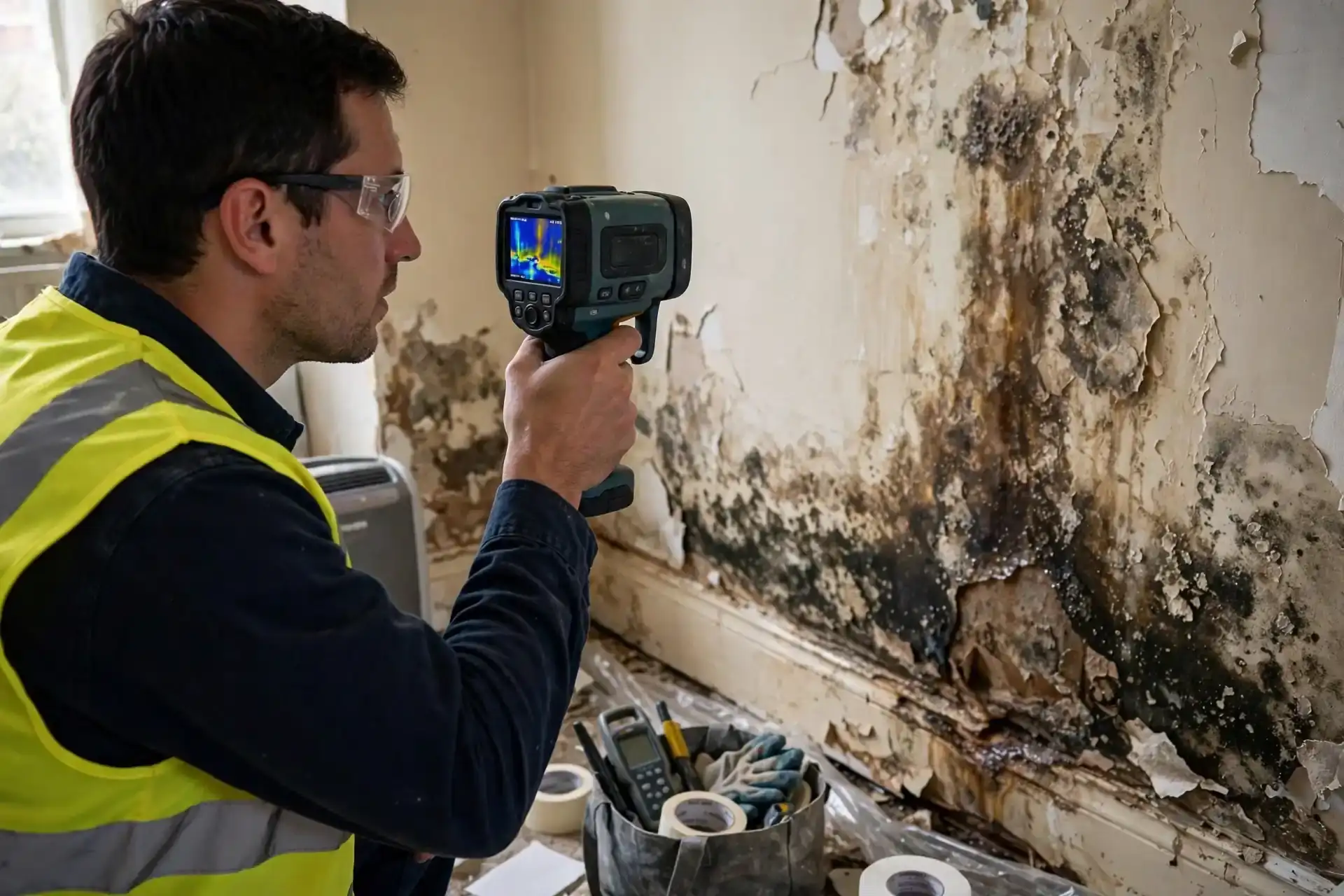
- Moisture mapping. Meters and thermal imaging find saturation in wall cavities, subfloors, and crawlspaces — the places Jeff Park's vintage homes hide water.
- Drying and monitoring. Air movers and dehumidifiers run until readings prove materials are truly dry.
- Cleaning, sanitizing, and mold control. Affected surfaces are cleaned and disinfected; mold is contained and removed to IICRC standards.
- Repairs and walkthrough. Damaged drywall, flooring, and finishes are restored to pre-loss condition, everything is documented for your insurer, and we walk the job with you before closing out.
Cost Factors & Insurance Claim Help
We scope every job from what we find on site — no flat-rate guesses: water category, rooms and materials affected, how long they stayed wet, and whether vintage construction needs specialized handling. Sewer backup coverage often hinges on a specific policy endorsement, so documentation matters. We photograph everything, log moisture readings, and work directly with your insurance company from first call to final walkthrough.
Frequently Asked Questions
Jefferson Park sits on a watershed divide. Does that make flooding better or worse?
Neither — it changes the mechanism. The divide means almost no riverine flooding, but the flat glacial plain offers no drainage relief, so water comes from below: combined-sewer surcharge and overland flow during big storms. The 2010 and 2013 storms each dropped five and a half inches, and the sewers did the flooding.
Why do local plumbers always name the 2010 and 2013 storms?
Those two events produced the worst basement flooding working plumbers have seen here over decades on the job. They are the benchmark: when a forecast resembles those storms, neighborhood veterans start checking basements early.
What is an overhead sewer, and why are they so common in Jeff Park?
An overhead sewer conversion reroutes basement drainage so it pumps up and out above the surcharge level of the municipal combined sewer — instead of flowing by gravity at a level the city main can flood. That is why overhead-sewer retrofits and backwater valves are standard flood-control practice in Jefferson Park bungalows.
My basement only floods when the thaw comes. What is happening?
That is the ice-concealed crack pattern. Pipes or foundation walls can crack silently during deep cold — the 2019 polar vortex (−23°F, wind chills near −52°F) is the archetype — hidden until the thaw. Check crawlspaces, porches, and exterior-wall plumbing the morning after a deep freeze ends.
My home still has its original clay sewer lateral. Should I repair or replace it?
Century-old clay laterals crack, shift, and collapse, and they are the pipe through which surcharge enters your basement. Whether repair suffices depends on the line's condition, which a camera inspection shows. Until the lateral is sound, every big storm is a test of it.
Water Damage in Jefferson Park, Chicago? We Respond 24/7
Every minute counts. Rapid Water Damage Restoration Illinois dispatches certified technicians across Jefferson Park, Chicago day and night — with insurance documentation handled for you.
Call (773) 200-3228 NowWater Damage Restoration Services in Jefferson Park
- Our water damage restoration service
- Commercial Water Damage Restoration in Jefferson Park
- Residential Water Damage Restoration in Jefferson Park
- Emergency Flood Cleanup in Jefferson Park
- Storm & Flood Damage Restoration in Jefferson Park
- Ceiling & Wall Water Damage Repair in Jefferson Park
- Sewage Backup Cleanup in Jefferson Park
- Mold Remediation in Jefferson Park
- Burst Pipe & Leak Water Damage in Jefferson Park
- Drying & Dehumidification in Jefferson Park
Nearby Areas We Serve Around Jefferson Park
Helpful Water Damage Guides
- How to Prevent Frozen and Burst Pipes During an Illinois Winter
- Does Homeowners Insurance Cover Water Damage in Illinois?
Official resources: FEMA FloodSmart (flood insurance) and EPA guide to mold and moisture.